
Digital technology in the U.S. is entering a phase where “adoption” matters less than “operational advantage”—what you can run reliably, secure, and scale without burning budget or trust.
If you feel like every vendor pitch sounds the same (AI here, automation there), you’re not alone. What’s changing in 2026 is that buyers are asking tougher questions: Does it reduce risk, improve speed, or create measurable customer value? And can we govern it?
This article focuses on the shifts that tend to impact real roadmaps: how artificial intelligence and machine learning move from experiments to systems, how cloud computing strategy gets more opinionated, why cybersecurity becomes a design constraint, and where data analytics, automation, Internet of Things, and blockchain technology actually fit.
What’s really changing in 2026 (and why it feels different)
In many organizations, 2023–2025 was about “trying” new tools. In 2026, leadership pressure shifts toward repeatability: fewer pilots, more platforms, and clearer accountability. That alone changes buying criteria.
Three drivers show up across industries, even though the details vary by company size and regulatory exposure.
- Cost realism: cloud bills, security spend, and data tooling sprawl force consolidation and FinOps-style governance.
- Risk and compliance: AI usage, data residency, and vendor risk require stronger controls, not just good intentions.
- Talent bottlenecks: teams can’t maintain ten frameworks and eight dashboards, so standardization wins.
According to NIST, strong cybersecurity outcomes come from risk management practices and well-defined controls, which is why more tech planning starts with risk models rather than feature wishlists.

AI gets “productized”: from demos to governed systems
In 2026, the biggest AI change is less about new models and more about deployment discipline. Many teams already have proofs of concept; the hard part is turning them into services with uptime, monitoring, and safe data handling.
What to watch
- Model governance becomes non-optional: versioning, evaluation, approval flows, and audit trails.
- “Right-sized” ML: classic machine learning often outperforms fancy approaches when data is structured and decisions are repeatable.
- AI security posture: prompt injection, data leakage, and third-party model risk become board-level concerns in regulated sectors.
According to NIST, AI risk management emphasizes mapping risks, measuring them, and managing them across the lifecycle—useful language when you need alignment between product, security, legal, and operations.
Practical takeaway: treat AI like any other production system, with SLOs, incident response, and change management, not like a “lab project.”
Cloud computing becomes a portfolio decision, not a default
U.S. companies aren’t “leaving the cloud” so much as getting more selective. The question shifts from “cloud-first” to “cloud-appropriate,” especially for workloads with predictable utilization or strict latency needs.
In practice, 2026 cloud strategy usually has three layers: core platforms that stay standardized, edge workloads that need locality, and legacy apps that get modernized only when there’s a clear payoff.
Common moves that reduce regret
- FinOps and unit economics: tie cloud spend to products, teams, and business outcomes.
- Platform engineering: internal paved roads for deployment, secrets, observability, and access controls.
- Exit-aware architecture: design portability where it matters, but don’t over-engineer everything “just in case.”
According to the Cloud Security Alliance, shared responsibility remains central—many cloud incidents are rooted in configuration and identity issues, not cloud provider failure.
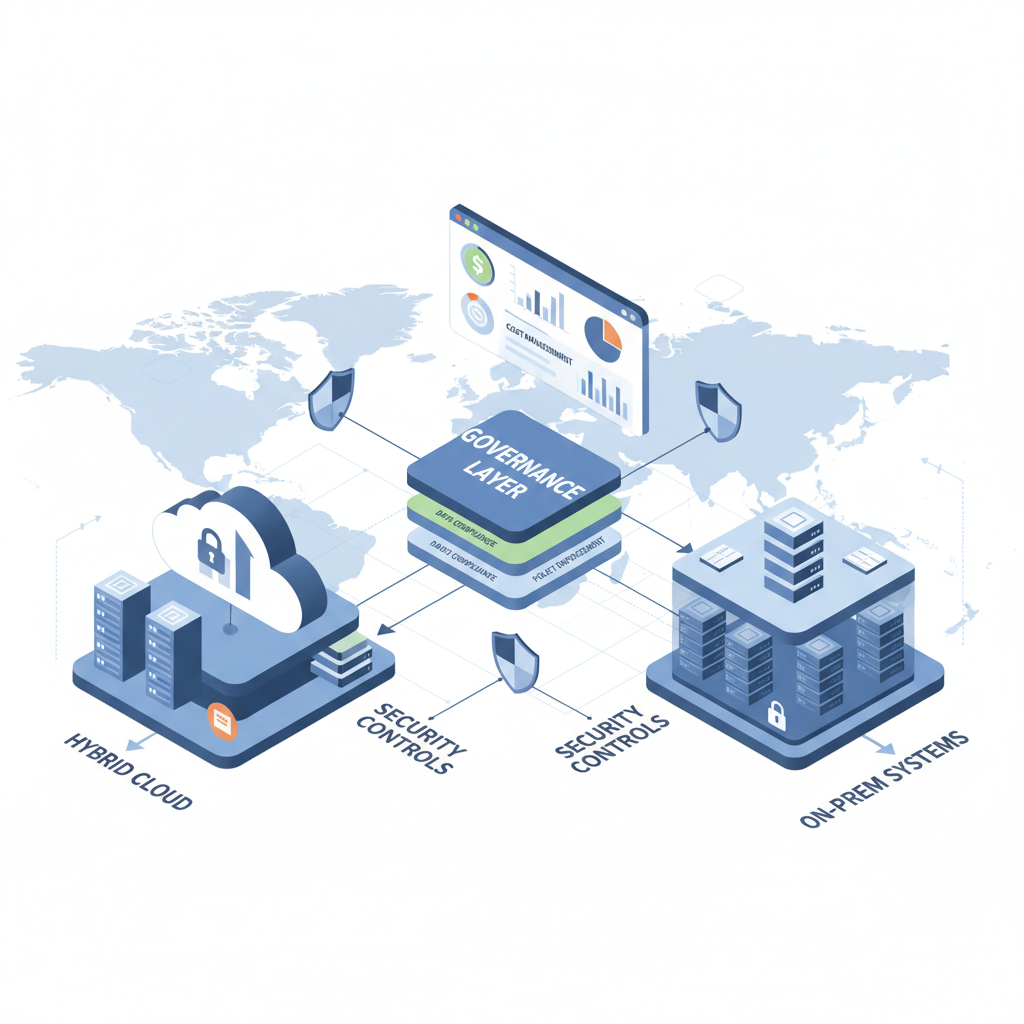
Cybersecurity shifts left, then spreads everywhere
Security used to be a checkpoint. Now it behaves more like a design constraint across apps, data, identity, vendors, and even AI. That can feel annoying, but it also prevents expensive rework.
Many U.S. organizations in 2026 push toward a “secure by default” posture: least privilege identity, continuous verification, and tighter controls around sensitive data.
Areas that commonly tighten in 2026
- Identity and access: phishing-resistant MFA, privileged access management, and better joiner-mover-leaver processes.
- Third-party risk: vendor security reviews, SBOM expectations, and clearer breach notification terms.
- Security telemetry: better logging and detection engineering so teams can respond quickly.
According to CISA, reducing risk often starts with basics such as asset visibility and strong identity practices, which is why “boring” security work still beats shiny tools.
Data analytics grows up: fewer dashboards, more decisions
Teams are tired of endless KPIs that don’t change behavior. The 2026 analytics conversation leans toward decision support: what data drives pricing, fraud detection, supply planning, customer retention, or operational reliability.
What changes is the operating model: data products, shared definitions, and measurable data quality, so the same metric means the same thing across finance, product, and operations.
A quick table: where many teams refocus
| Area | What was common | What tends to work better in 2026 |
|---|---|---|
| Metrics | Many dashboards, inconsistent definitions | Canonical metrics tied to decisions and owners |
| Data pipelines | Ad hoc scripts, tribal knowledge | Observable pipelines with tests and lineage |
| Governance | Central gatekeeping slows teams | Federated governance with clear guardrails |
| AI readiness | Model-first experimentation | Data quality and access controls as prerequisites |
According to DAMA International, effective data management depends on clear roles, definitions, and quality practices, which is why governance is less about paperwork and more about operational clarity.
Emerging technologies: what’s real, what’s situational
Not every trend deserves a roadmap slot. In 2026, it’s helpful to separate “broadly applicable” from “only if your constraints match.”
Internet of Things and edge
IoT value usually comes from reduced downtime, better asset utilization, or safety monitoring. It struggles when device management, connectivity, and data ownership are fuzzy.
- Worth watching if you operate physical assets, logistics networks, facilities, or regulated environments.
- Plan for device identity, patching, and segmentation early, not after rollout.
Blockchain technology
Blockchain tends to fit best when multiple parties need a shared, tamper-evident record and no single party should control the system. Outside that, traditional databases often win on simplicity and cost.
- More plausible in supply chain traceability, settlement workflows, and provenance, depending on partners.
- Be cautious about vendor claims, and validate operational requirements like throughput, governance, and dispute handling.
Automation
Automation remains one of the least glamorous but highest-ROI levers, especially when tied to repetitive workflows in finance ops, customer support, IT, and security. The trap is automating messy processes without fixing them.

A practical 90-day plan for digital transformation in 2026
Digital transformation fails more often from unclear scope than from weak tools. If you want momentum without chaos, aim for a 90-day cycle that produces one or two measurable outcomes.
Step 1: Pick one business problem with a hard metric
- Examples: reduce customer onboarding time, improve incident response, lower cloud cost per transaction, reduce fraud losses.
- Define the metric owner and the baseline, even if it’s imperfect.
Step 2: Map dependencies before buying anything new
- Data sources and access approvals
- Security controls and compliance constraints
- Integration points with core systems
Step 3: Build the “paved road” alongside the use case
- Identity, logging, secrets, CI/CD templates, monitoring
- Minimum governance for AI or analytics: evaluation, approvals, rollback
Step 4: Decide what you will stop doing
This sounds political, but it’s where most savings come from: retire one redundant dashboard tool, freeze one legacy integration pattern, or consolidate one cloud account sprawl problem.
Key points to keep on a single slide
- One outcome (metric), one platform direction, one governance model
- Security and privacy constraints written down in plain language
- A de-scope list to protect delivery
Common mistakes (the ones that cost you the year)
- Chasing emerging technologies without operating capacity: if you can’t patch, monitor, and train users, you’re adding risk.
- Assuming AI fixes bad data: it often amplifies inconsistencies and access problems.
- Letting cloud sprawl become “normal”: cost allocation and ownership usually need a reset.
- Over-centralizing transformation: a small center of excellence helps, but execution must live with product and ops teams.
If your roadmap touches regulated data, critical infrastructure, or safety-relevant operations, it’s usually smart to involve qualified security, legal, or compliance professionals early, because fixes later cost more and can disrupt delivery.
Conclusion: what to watch next, without getting overwhelmed
The most important 2026 shift is that digital technology becomes less about novelty and more about operational credibility: governed AI, disciplined cloud usage, security built into workflows, and analytics that change decisions.
If you want one action that pays off fast, pick a single transformation outcome and design the supporting platform controls around it. If you want a second action, audit sprawl—tools, vendors, identities, and data definitions—and decide what you can simplify in the next quarter.
Done well, the “next wave” won’t feel like chasing trends, it’ll feel like fewer surprises, cleaner execution, and technology that actually supports the business.