
Best portable bluetooth speakers for outdoor parties are the ones that stay loud in open air, survive spills and dust, and keep playing long after the sun goes down. Indoors, almost any speaker can sound “fine”, but outside you lose walls that normally amplify bass and volume, so weak models disappear the moment people start talking.
If you’re shopping for an outdoor-party speaker, you’re usually balancing three things that don’t always get along: real volume, real battery life, and a size you’ll actually bring. Add water resistance, easy pairing, and a little common sense about where you’ll place it, and the “best” choice starts to look different for different backyards.
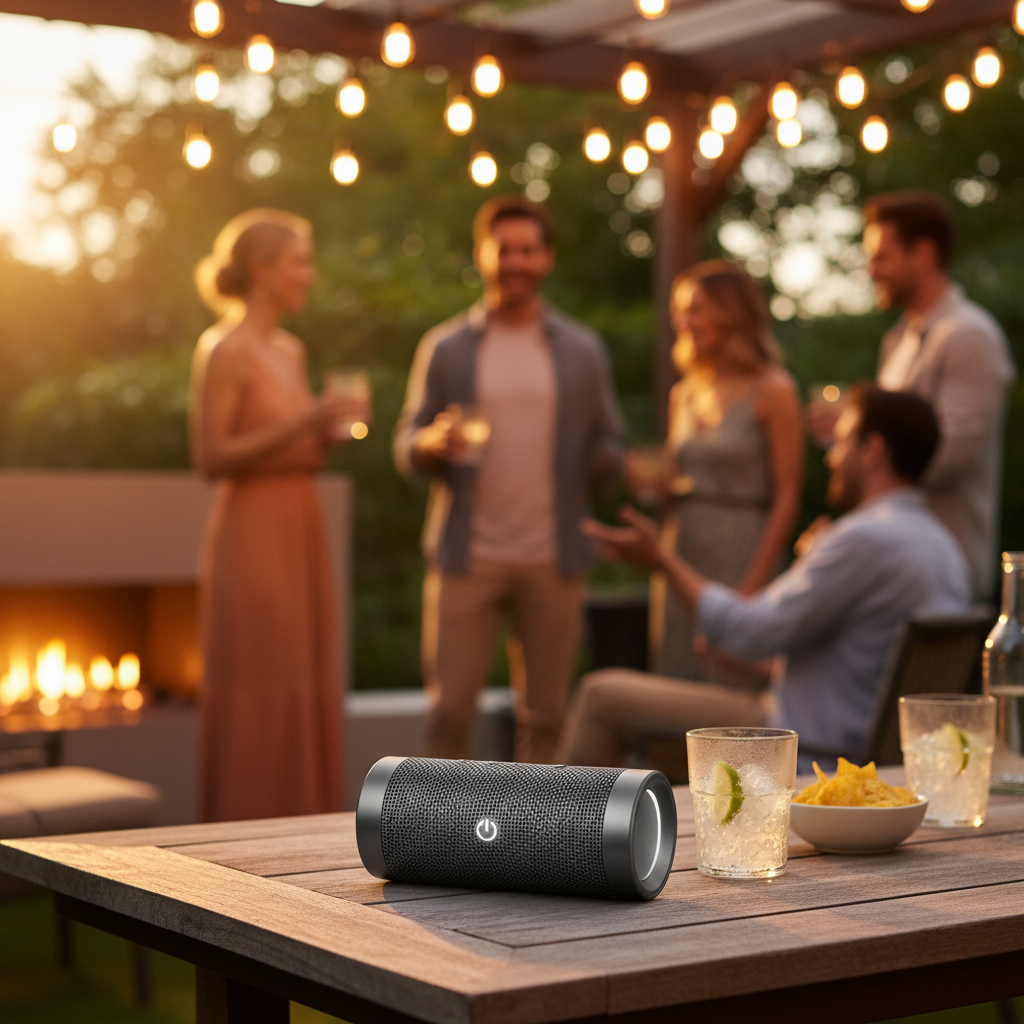
This guide breaks down what matters most outdoors, a quick self-check to match the speaker to your party style, a comparison table, and practical setup tips so you get better sound without overthinking specs.
What actually matters for outdoor party sound
Outdoor audio is less forgiving, so a spec sheet can mislead. Here’s what tends to make or break the experience in real yards, parks, and tailgates.
- Real-world loudness (not just watts): Many brands don’t publish comparable loudness numbers, and “peak power” marketing rarely helps. Look for reviews that mention staying clear at higher volume, not just “gets loud.”
- Battery life at party volume: A speaker rated for 20 hours may hit that at moderate volume. If you expect to run it loud, assume noticeably less runtime, then plan a charging option.
- Water and dust resistance: For outdoor use, IP ratings matter. IPX7 helps with accidental dunking, while IP67 covers dust plus water immersion, which is reassuring for sand, dirt, and pool decks.
- Portability vs. bass: Deeper bass usually needs more cabinet volume. Tiny speakers can be great for a picnic, but they rarely “carry” for a crowd of 15+.
- Multi-speaker pairing: If you host often, pairing two speakers (stereo or party mode) can outperform one larger unit for coveRAGe, assuming pairing is stable.
According to the Federal Communications Commission (FCC), Bluetooth operates in shared spectrum, which is one reason interference can happen around crowded Wi‑Fi environments. In practice, that means your placement and pairing habits matter almost as much as the speaker.
Quick self-check: which “best” are you actually looking for?
Before you compare models, pin down your typical party. This avoids buying a “hero” speaker that’s wrong for how you host.
- Group size: under 8, 8–15, or 15+ people
- Space: small patio, open backyard, beach/park
- Noise floor: quiet hangout vs. loud conversations and games
- Power access: outlet nearby, car nearby, or no power
- Risk factors: pool, sprinklers, sand, kids, pets
- Music style: podcasts/acoustic, pop, hip-hop/EDM (bass demands)
If you regularly host 15+ people in an open yard, you’ll usually be happier prioritizing output and battery over ultra-compact size. If it’s mostly 6 friends near a fire pit, portability and easy controls tend to win.
Comparison table: how to evaluate top outdoor-party picks
You’ll see plenty of “best portable bluetooth speakers for outdoor parties” lists that jump straight into brand names. I’d rather give you a clean scoring view so you can compare what you’re already considering, or narrow down what to research next.
| Use case | Ideal size | IP rating target | Battery target | Pairing features | What to watch for |
|---|---|---|---|---|---|
| Small patio hang | Compact (1–3 lb) | IPX5–IPX7 | 10–15 hrs | Fast reconnect, multipoint | Thin bass outdoors, harsh highs at max |
| Backyard BBQ (10–15) | Mid-size (3–8 lb) | IP67 preferred | 15–24 hrs | Stereo/pair mode, app EQ | Battery drop when volume stays high |
| Pool day / beach | Mid-size, rugged | IP67 | 15–24 hrs | Stable range, simple controls | Sand in ports, slippery finishes, float claim nuances |
| Big open space (15+) | Large/boombox (8–30 lb) | IPX4–IP67 | 20+ hrs or swappable | Party mode, multiple units | Transport, charging time, neighbor-friendly volume control |
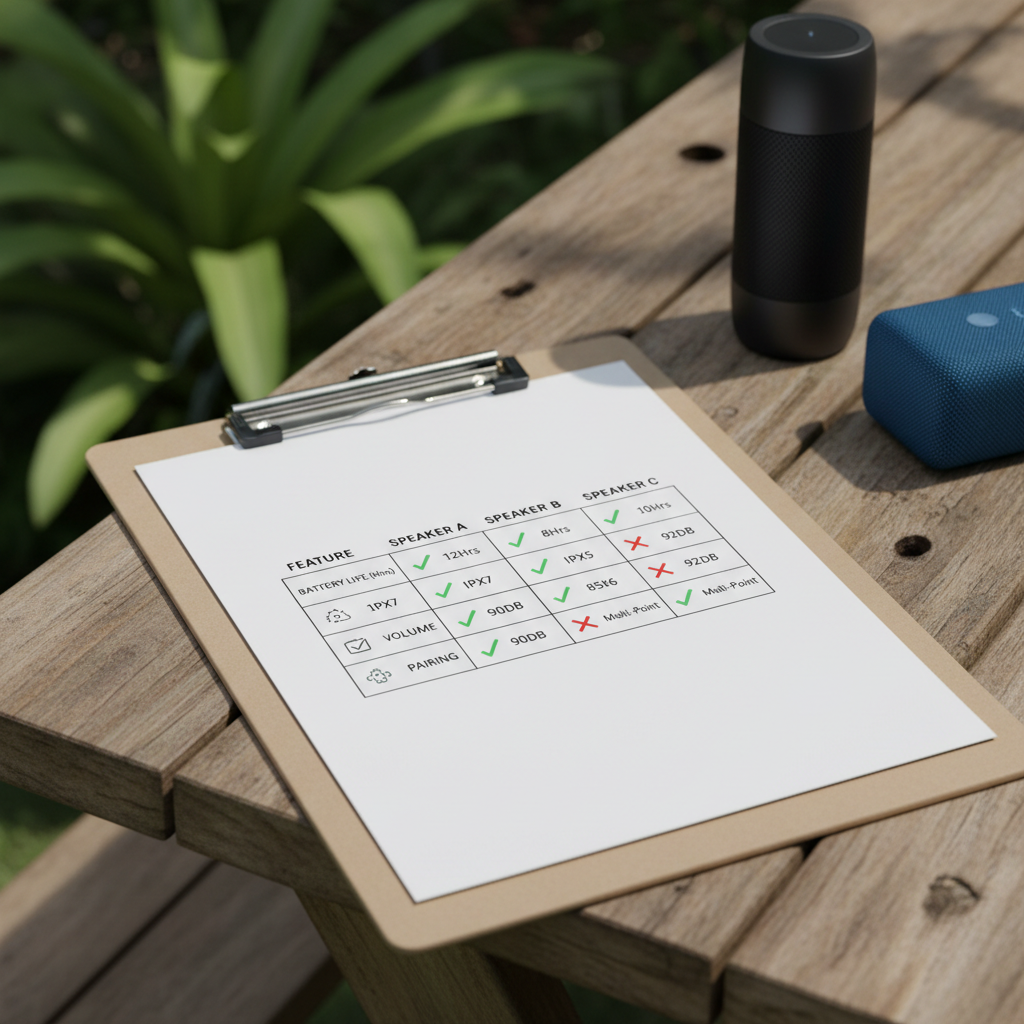
Key takeaway: outdoors, “bigger than you think” is often the right move, unless you plan to run two smaller speakers in a pairing mode for coverage.
Shortlist of speaker types that usually win outdoors
Rather than pretending there’s one universal winner, these categories cover most outdoor-party needs. When you’re filtering, start here and then pick the model with the controls and durability you trust.
1) Compact rugged speakers (good sound, easy to carry)
- Best for: small groups, travel, hiking, low-stress hangouts
- Look for: IP67, strap/clip, USB-C charging, simple button layout
- Tradeoff: bass and “throw” can feel limited once people spread out
2) Mid-size party-ready speakers (most people’s sweet spot)
- Best for: backyards, patios, small pool parties, tailgates
- Look for: strong midrange clarity, app EQ (so you can tame harshness), reliable stereo pairing
- Tradeoff: not pocketable, takes longer to charge
3) Boombox-style speakers (coverage and impact)
- Best for: bigger yards, louder crowds, open spaces
- Look for: comfortable handle, long runtime at higher volume, robust low end without rattling
- Tradeoff: size, cost, and the temptation to run it too loud for neighbors
Practical setup: make any speaker sound better outside
Even the best portable bluetooth speakers for outdoor parties can sound underwhelming if you place them like an indoor bookshelf speaker. Small tweaks make a bigger difference than people expect.
- Get it off the ground: put it on a table or sturdy shelf so the sound projects into the crowd instead of ankles and grass.
- Use a “backstop”: positioning near a wall, fence, or the house can add perceived fullness, since the surface reflects some energy back.
- Aim for the center: if people spread out, consider two smaller speakers placed apart (if pairing is solid) rather than one unit blasting from a corner.
- Start with EQ, not volume: if vocals get buried, bump mids slightly; if it sounds sharp, reduce treble a touch. Many apps make this easy.
- Protect the connection: keep the phone within reasonable range and avoid putting it behind grills, coolers, or metal furniture that can weaken signal.
If you plan to use a power bank, check whether the speaker supports playing while charging, some do, some behave unpredictably, and a few introduce noise at higher volume.
Buying checklist (use this in-store or on a product page)
This is the fast “don’t get tricked” list I’d use if I had five minutes before checkout.
- IP rating: aim for IP67 if water, dust, sand are realistic
- Controls: dedicated volume and track buttons, easy to find by feel
- Charging: USB-C preferred; check charge time and charger wattage support
- Battery honesty: read reviews mentioning runtime at higher volume
- Pairing: stereo/party mode, plus how easy it is to reconnect next time
- Return policy: audio is personal, and outdoor performance varies by space
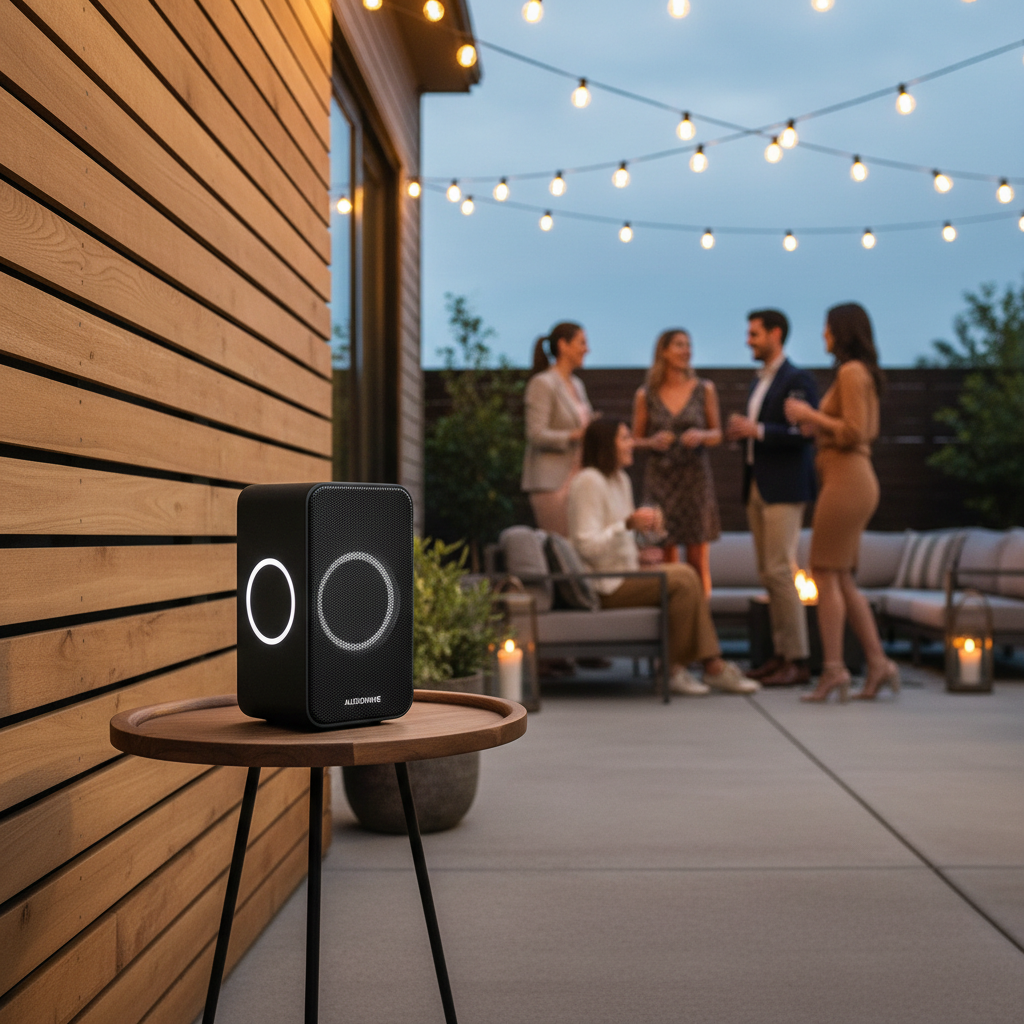
One more reality check: if your “outdoor party” means a wide open park with wind and 20 people, small cylinders rarely satisfy. In that situation, either go larger or plan on two speakers.
Common mistakes that waste money (or kill the vibe)
- Buying for indoor reviews only: a speaker praised for “warm bass” indoors can sound thin outside.
- Ignoring charging logistics: long battery claims are nice, but if it takes forever to recharge, you’ll end up stressed before guests arrive.
- Maxing volume all night: distortion fatigue is real, and it can make a good speaker feel “bad.” Dial back slightly and adjust EQ.
- Assuming waterproof means invincible: water resistance doesn’t always cover ports left open, saltwater exposure, or impact damage. If your use case is rough, read the warranty terms carefully.
- Overlooking neighbors: you can host a great party without turning the yard into a concert. Better placement often beats more volume.
For safety, if you’re using extension cords outdoors, it’s usually wise to use outdoor-rated cords and keep connections away from standing water, and if you’re unsure, consider asking a qualified electrician for guidance.
Conclusion: how to pick confidently in 10 minutes
The best portable bluetooth speakers for outdoor parties are the ones matched to your crowd size and space, with enough output to stay clear outdoors, plus an IP rating you don’t have to babysit. If you want the simplest decision, choose a mid-size rugged speaker with IP67 and reliable pairing, then add a second unit later if you host bigger groups.
Your next step can be simple: decide your typical group size, set a minimum IP rating for your environment, then shortlist two or three speakers and compare pairing stability and runtime from real user reviews.
FAQ
- What makes a speaker “good” for outdoor parties compared to indoor use?
Outside, sound disperses quickly, so you need more headroom for volume and better midrange clarity for vocals. Placement and pairing features matter more too. - Is IPX7 enough for pool parties?
Many times, yes for splashes or brief dunking, but IPX7 doesn’t cover dust. If you expect sand, dirt, or lots of wet handling, IP67 is usually the safer target. - Should I buy one big speaker or two smaller ones?
One big speaker is simpler. Two smaller speakers can cover a wider area and sound more balanced, but only if the pairing connection stays stable where you host. - Do “boombox” speakers always sound better outdoors?
Often they project better and feel fuller, but not always “better” if you value portability or listen at moderate volume. Bigger can also tempt you to run it louder than you need. - How can I keep Bluetooth from cutting out during a party?
Keep the phone closer, avoid blocking it with metal objects, and reduce competing wireless congestion when possible. If your speaker supports it, a wired input can be a reliable backup. - What battery life should I expect if I play loud music?
Many speakers deliver less than the headline number at high volume. If you expect to run it loud, plan extra charging capacity or choose a model known for strong high-volume runtime. - Are portable speakers safe to use in light rain?
With an appropriate IP rating, light rain is usually fine, but it depends on the product and whether ports are sealed. If conditions get worse, it’s smart to move the speaker under cover.
If you’re trying to narrow down options quickly, a good shortcut is to list your party size, your “worst day” environment (pool splash, sand, no power), and whether you want to expand to two-speaker pairing later, then shop only within that lane, it saves time and avoids buying a speaker you’ll outgrow by the second BBQ.