
Modern technology is moving fast in the U.S., and the hardest part for many teams is not “keeping up,” it’s deciding what to ignore without falling behind.
If you lead a business, manage IT, run operations, or even just buy tools for a department, you’ve probably felt the pressure: every vendor pitch sounds urgent, budgets feel fixed, and risks (especially security) keep rising.
This guide breaks down the technology trends that are actually shaping the next few years, how they connect to real outcomes, and what a sensible first move looks like when you don’t have time for a full strategy refresh.
1) The trends that matter (and why they’re connected)
A lot of “trend lists” treat each topic like a separate island. In practice, modern technology stacks overlap: AI depends on data pipelines, those pipelines often live in cloud computing services, and once you connect Internet of Things devices you immediately inherit cybersecurity solutions requirements.

It helps to group trends by what they enable:
- Decision intelligence: artificial intelligence tools + data analytics software
- Scalable foundations: cloud computing services + edge computing platforms
- Connected operations: Internet of Things devices + 5G network applications
- Trust and resilience: cybersecurity solutions + selected blockchain technology use cases
- New interfaces: augmented reality experiences (often tied to training and field service)
- Execution at scale: automation and robotics systems
Key point: the “best” trend is usually the one that removes a bottleneck you already feel—slow reporting, manual workflows, downtime risk, training costs, or supply chain blind spots.
2) AI tools move from experiments to everyday workflows
Artificial intelligence tools are no longer limited to data science teams. In many organizations, the shift is toward AI embedded inside existing products: customer support, document processing, forecasting, and developer tooling.
Where teams get stuck is governance and quality. AI can speed up work, but it can also produce confident errors or leak sensitive context if permissions are messy.
Practical use cases you can pilot quickly
- Customer support triage: summarize tickets, suggest replies, route issues
- Operations paperwork: extract fields from invoices, claims, forms
- Sales enablement: call summaries, next-step drafting, account research
- Engineering: code review assistance, test generation, documentation drafts
According to NIST, organizations should treat AI risk management as an ongoing process, not a one-time checklist—especially around security, bias, and reliability in production workflows.
3) Cloud + edge: the “where” of computing is getting more flexible
Cloud computing services still dominate new application builds, but edge computing platforms are growing in scenarios where latency, uptime, or data locality matters. This is less about replacing cloud, more about putting compute closer to where data is generated.
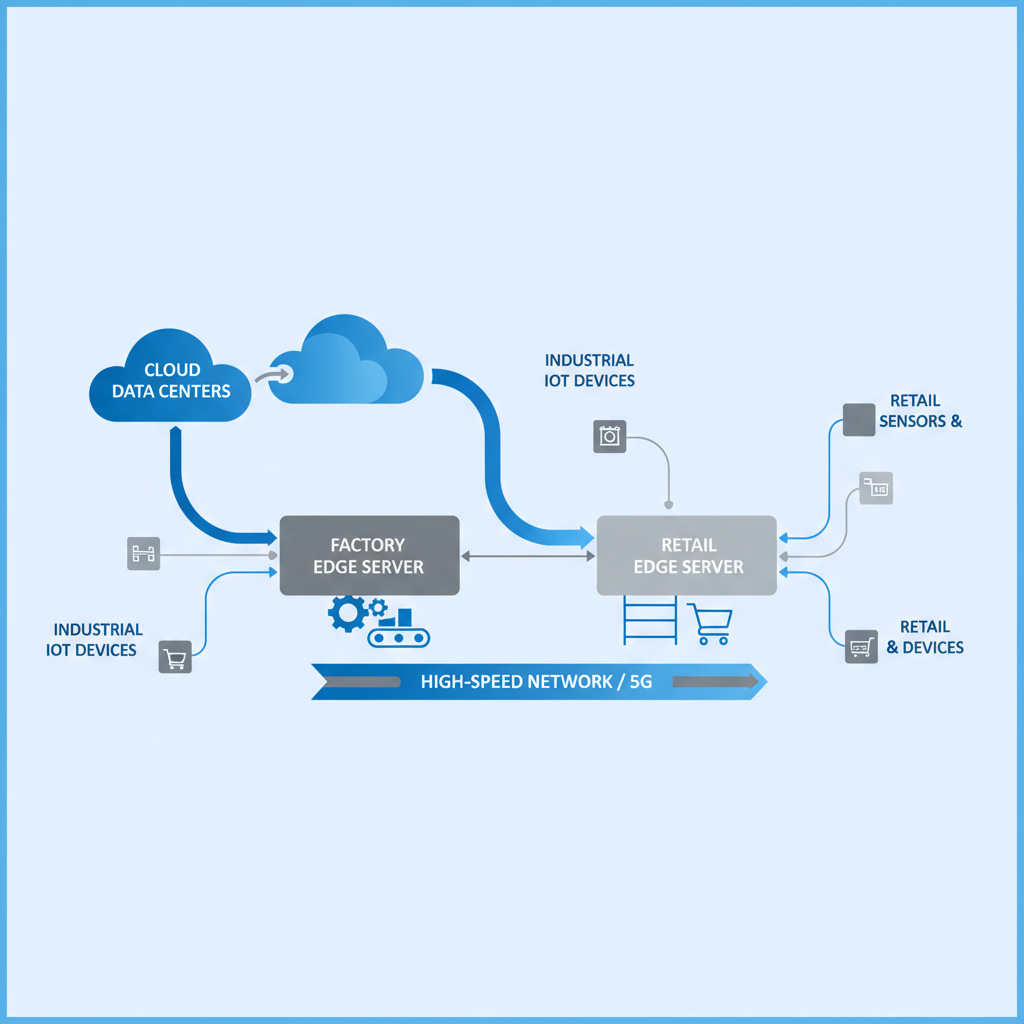
Common reasons U.S. teams adopt a hybrid approach:
- Lower latency: near-real-time monitoring for manufacturing, logistics, healthcare devices
- Bandwidth control: filter or aggregate video/sensor data before sending upstream
- Resilience: keep critical functions running during network interruptions
- Regulatory or contractual constraints: data residency or retention requirements
Cloud cost control is another driver. Many organizations now focus on FinOps-style practices: tagging, usage visibility, and right-sizing—less glamorous than new features, but often more valuable.
4) IoT + 5G: more connected devices, more operational leverage
Internet of Things devices are getting cheaper and easier to deploy, and 5G network applications make connectivity more viable in places that used to be hard: temporary sites, distributed fleets, busy warehouses, or remote facilities.
The value usually shows up in three places:
- Asset visibility: location, condition, utilization
- Predictive maintenance: detect drift before a failure stops operations
- Safety monitoring: environment sensors, equipment status alerts (often needs careful policy and consent)
One reality check: device rollouts fail more from operational friction than from technology. Battery replacement, calibration, and “who owns the dashboard” become real issues by week six.
5) Cybersecurity becomes the baseline, not a project
As modern technology spreads across SaaS, endpoints, APIs, and connected devices, cybersecurity solutions become less about a single tool and more about consistent coverage.
Most programs that hold up under pressure share a few traits:
- Identity-first controls: strong authentication, least-privilege access, good offboarding
- Continuous monitoring: log collection, alert tuning, incident playbooks
- Vendor hygiene: security reviews for key providers, especially data processors
- Backups and recovery testing: ransomware planning is as much operations as it is security
According to CISA, basic cyber hygiene—like phishing resistance, patch management, and secure configuration—remains a major factor in reducing common attack paths.
6) Data analytics software: turning “data-rich” into “decision-ready”
Many organizations already have a lot of dashboards. The missing piece is often trust: definitions change, data arrives late, or different teams argue about which number is correct. That’s why investments in data analytics software increasingly pair with data governance and quality checks.
What to prioritize depends on maturity:
- If reporting is slow: fix pipelines, refresh frequency, and ownership
- If numbers disagree: standardize metrics and document definitions
- If adoption is low: simplify dashboards, focus on decisions, not vanity charts
AI initiatives also lean heavily on analytics foundations. If your data is messy, AI simply helps you be wrong faster—harsh, but commonly true.
7) Automation, robotics, AR, and blockchain: where “next” becomes practical
This bucket is where hype can get loud, but there’s real progress when the use case is concrete.

Where automation and robotics systems pay off
- Repetitive handling: picking, sorting, packaging support
- Quality checks: machine vision for defects (watch for false positives)
- Back-office automation: approvals, reconciliation, ticket routing
Augmented reality experiences that make sense
- Training: step-by-step guidance for new hires
- Field service: remote expert assist, hands-free instructions
Blockchain technology use cases that are realistic
- Shared audit trails: multi-party workflows where trust is limited
- Provenance tracking: certain supply chain scenarios (benefit varies by partner adoption)
In many cases, a traditional database with strong access controls is still the simpler answer. Blockchain tends to earn its keep only when multiple parties need a tamper-evident record and no single party should own the “source of truth.”
Quick comparison table: what to adopt first
If you need a fast way to prioritize, this table is a decent starting filter.
| Trend | Best for | Common pitfall | Good first step |
|---|---|---|---|
| Artificial intelligence tools | Knowledge work acceleration | Unclear data access + weak review | Pilot 1 workflow with guardrails |
| Cloud computing services | Scalability and speed | Cost sprawl | Tagging + budgets + right-sizing |
| Edge computing platforms | Low-latency operations | Hard-to-manage fleets | Start with 1 site, automate updates |
| IoT devices + 5G apps | Asset and condition visibility | Maintenance burden | Define device ownership + lifecycle |
| Cybersecurity solutions | Risk reduction everywhere | Tool overload without process | Identity, patching, backups first |
| Data analytics software | Decision-making at scale | Metric confusion | Standardize 10 core metrics |
| Automation/robotics, AR, blockchain | Targeted efficiency and trust | Buying tech before workflow design | Map the process, then prototype |
Action plan: a realistic 30-60-90 day approach
Most teams don’t need a moonshot plan, they need momentum without chaos. Here’s a practical cadence that works in many environments.
Days 1–30: pick one outcome, not five
- Choose one measurable bottleneck (cycle time, ticket backlog, downtime, close speed).
- Inventory what you already pay for across modern technology tools, there’s often overlap.
- Set basic guardrails: data access rules, review expectations, and who approves changes.
Days 31–60: pilot with real users and real constraints
- Run a pilot in a live workflow, not a demo environment that hides the mess.
- Track 2–3 metrics, keep it boring and comparable.
- Pressure-test security and permissions early, especially if AI touches internal documents.
Days 61–90: decide scale vs. stop
- Scale only if you can support it: onboarding, monitoring, cost controls, incident response.
- If results are mixed, narrow scope rather than adding features.
- Document what changed, future you will be grateful.
Common mistakes (and how to avoid them)
- Buying a platform to “be future-ready”: tie spend to a workflow and an owner, or adoption drifts.
- Ignoring data readiness: AI and analytics both suffer when definitions and quality are unclear.
- Over-connecting devices: more IoT endpoints can mean more attack surface if security is an afterthought.
- Skipping change management: the tool might be good, but people still need training and time.
- Assuming 5G fixes everything: coverage, building materials, and device compatibility still matter.
Conclusion: focus on compounding wins
The most durable approach to modern technology in the U.S. is not chasing every headline, it’s building a stack that compounds: secure identity, clean data flows, scalable compute, and a handful of well-chosen automations that make work noticeably easier.
If you do one thing this week, pick a single business bottleneck and map it to one trend you can pilot with guardrails. The future shows up faster when you stop arguing about “transformation” and start improving one workflow at a time.