
Best budget portable blenders with usb charge sound like a simple buy, until you realize half the listings don’t clearly explain power, battery size, or what they can actually blend without stalling.
If you want something you can toss in a bag and use at work, the gym, or a hotel, the “budget” part matters, but so does getting a unit that won’t leak, won’t struggle with frozen fruit, and won’t become a pain to clean after two weeks.
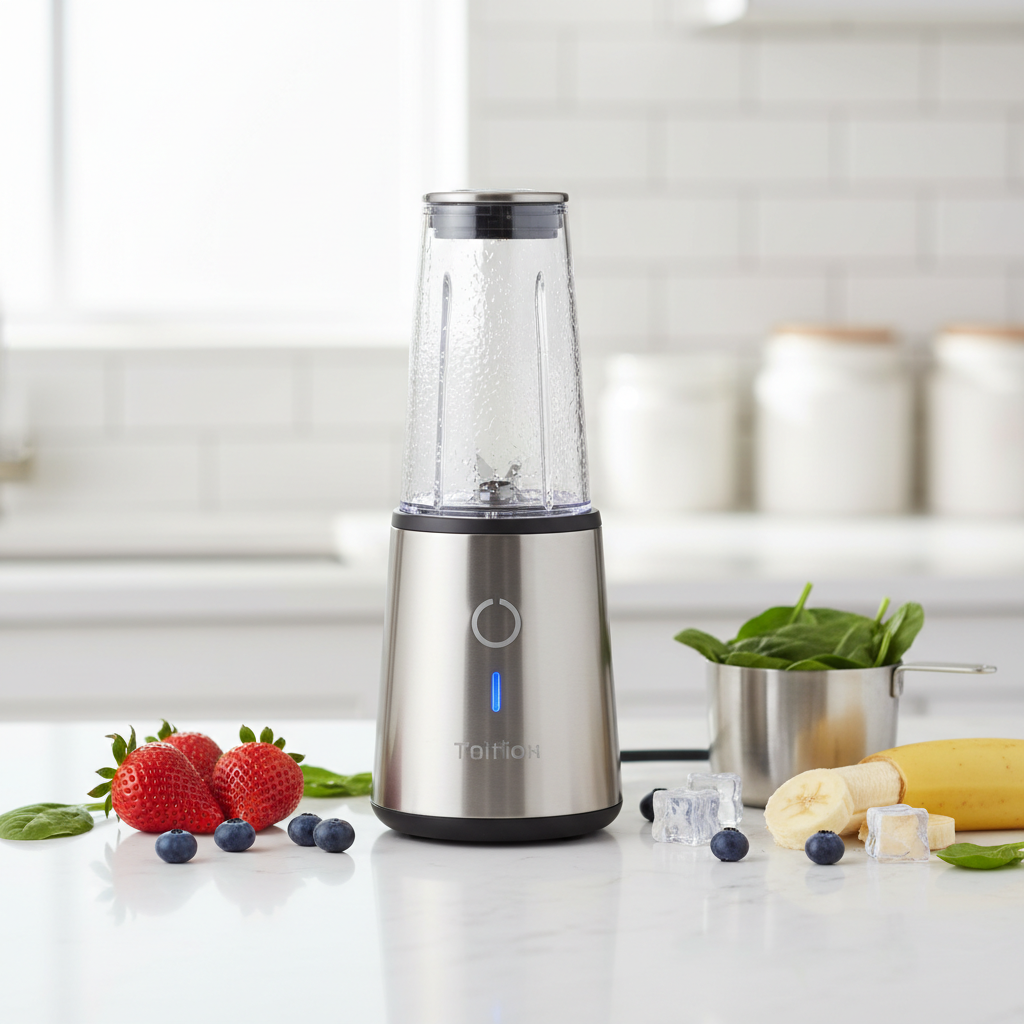
This guide focuses on what usually separates a “good enough” travel blender from a frustrating one, plus a quick comparison table, a practical checklist, and buying tips that match real use cases.
What “budget + USB charging” really means (and what it doesn’t)
USB charging is convenient, but it also creates a few trade-offs. Most portable units charge via USB-C or micro-USB, and many can run off a power bank, but you still need realistic expectations about motor strength and battery capacity.
- USB charging ≠ unlimited power. A corded countertop blender can pull far more wattage than a battery device.
- “Crushes ice” claims vary. Many budget models can handle a few small cubes with enough liquid, but not a full cup of ice by itself.
- Capacity is often smaller than photos suggest. “20 oz” might be total cup volume, not the safe fill line for blending.
According to the U.S. Food & Drug Administration (FDA), consumers should follow manufacturer instructions for safe use and cleaning of kitchen appliances, especially where food-contact surfaces are involved. That matters here because portable blenders often get rinsed quickly and stored wet, which can turn into odor or residue problems.
Quick comparison table: what to look for in budget portable blenders
If you’re scanning listings, these are the fields that tend to predict satisfaction more than brand names. Use the table as a “spec sanity check” before you buy.
| Feature | Why it matters | Budget-friendly target (typical) | Red flags |
|---|---|---|---|
| Charging port | Compatibility with modern cables and power banks | USB-C preferred | Proprietary cable, unclear input rating |
| Battery capacity | How many blends per charge you realistically get | ~2000–4000 mAh | No mAh listed, “lasts all week” with no context |
| Jar material | Durability and odor resistance | Tritan-like plastic or thick food-grade plastic | Very thin plastic, strong smell out of box |
| Blade + seal design | Leak risk and cleaning effort | Removable cup, decent gasket | Frequent leak reviews, gasket not replaceable |
| Safety lock | Prevents accidental starts in a bag | Twist-to-lock + button hold | Starts with a light tap, no lock mentioned |
| Realistic use case | Whether it matches your ingredients | Protein shakes, soft fruit, pre-cut frozen fruit | Heavy nut butter or dry blending claims |
Why budget portable blenders disappoint (common real-world reasons)
Most “this thing is weak” complaints come from mismatched expectations, but some are simply product design issues that show up more in cheaper models.
- Too little liquid. Portable blades are small; they need flow. Thick smoothie bowls are usually a bad match.
- Overpacked cups. Frozen chunks jam against the blade, the motor stalls, and you end up shaking it like a maraca.
- Seal and thread problems. Budget units sometimes ship with slightly misaligned threads or thin gaskets, which leads to leaks after a few uses.
- Battery sag. When the battery drops below a certain level, some units still “spin,” but torque falls off and blending quality tanks.
- Cleaning shortcuts. Rinsing only, then leaving the unit closed, often causes smells and sticky residue around the blade base.
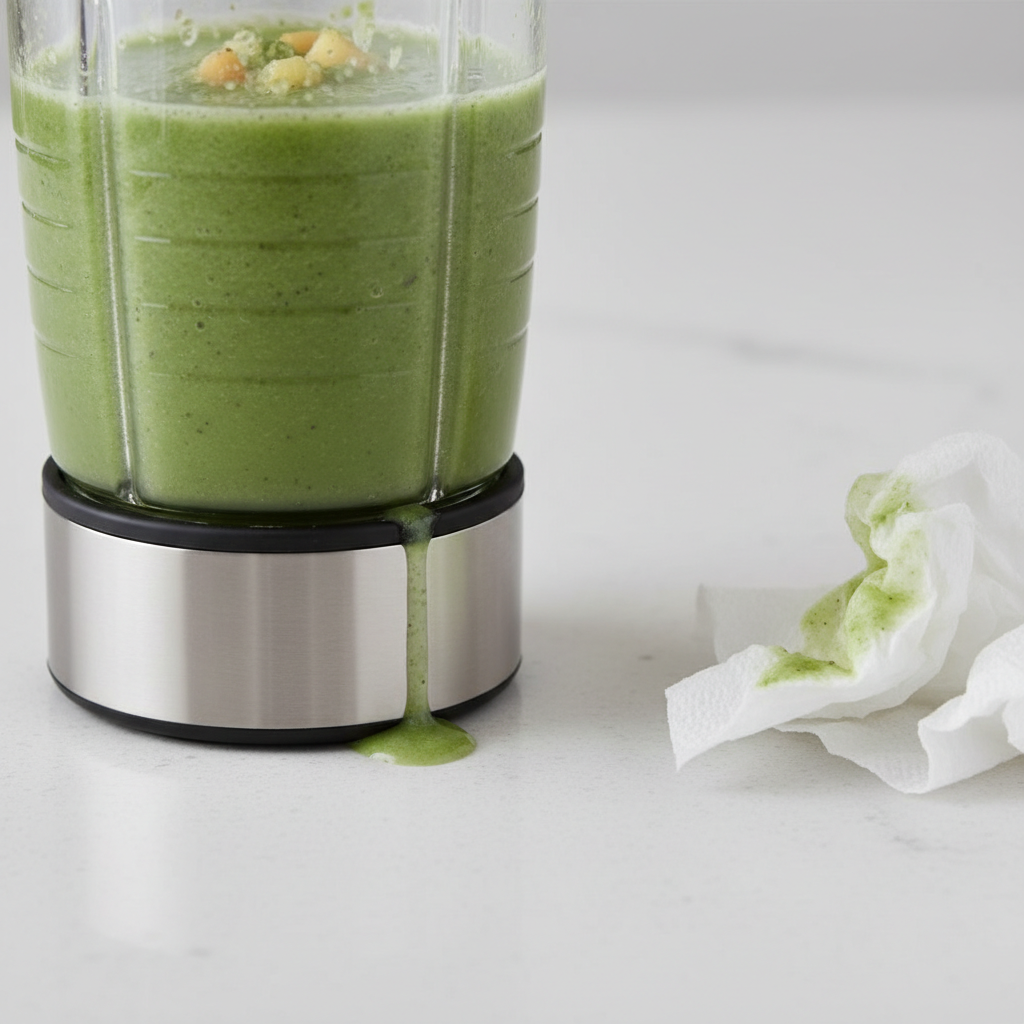
There’s also a sneaky one: some models have short auto-shutoff timers. That’s a safety feature, but if you’re blending frozen berries, you may need two cycles, not one.
A fast self-check: which portable blender type fits you?
This is the part most people skip. If you pick based on your actual ingredients, a budget unit can feel “surprisingly good.” If you pick based on marketing photos, it often disappoints.
If you mostly make protein shakes
- Prioritize: leak resistance, easy cleaning, cup size you’ll actually drink
- Nice-to-have: extra lid for travel, wide mouth for adding powder
- Most budget picks work fine here
If you want smoothies with frozen fruit
- Prioritize: stronger blade assembly, reliable safety lock, USB-C charging
- Plan to: add liquid first, use smaller frozen pieces, blend in two short cycles
- Budget units can work, but you’ll feel the difference between “okay” and “good” here
If you want ice-only drinks, nut butter, or very thick blends
- Portable budget blenders often struggle in this lane
- Consider: a compact corded blender, or a higher-end portable model with proven torque
- When in doubt, look for honest reviews that show the ingredient load, not just the final smoothie
How to choose the best budget portable blenders with usb charge (buying criteria)
When you’re hunting for the best budget portable blenders with usb charge, you’re really balancing four things: performance, cleanup, safety, and longevity. Here’s what I’d treat as non-negotiable.
- USB-C input with clear labeling. You want predictable charging, and modern cable compatibility.
- Locking mechanism you understand. Twist-to-lock plus a press-and-hold button is usually safer in a backpack.
- Replaceable gasket or at least a well-seated seal. Seals wear; leaks are the #1 mood-killer.
- Cup shape that’s easy to rinse. Narrow shoulders trap pulp, which becomes a smell problem fast.
Also, read listings for what they don’t say. If capacity, battery size, and charging specs aren’t stated, you’re buying blind, and budget products punish blind buys.
Practical use tips: get better blends from a small USB blender
Even the best budget portable blenders with usb charge benefit from technique. This is how to make a small motor feel stronger without “cheating.”
Ingredient loading order that usually works
- Liquid first (water, milk, juice)
- Soft ingredients (banana, yogurt)
- Powders (protein, greens)
- Frozen fruit last, in smaller pieces
Blending steps for frozen fruit (simple, effective)
- Fill only to the safe line, leave space for movement
- Run one short cycle, then gently swirl, not shake aggressively
- Run a second cycle if needed, stop if the motor stalls repeatedly
Cleaning that prevents odor
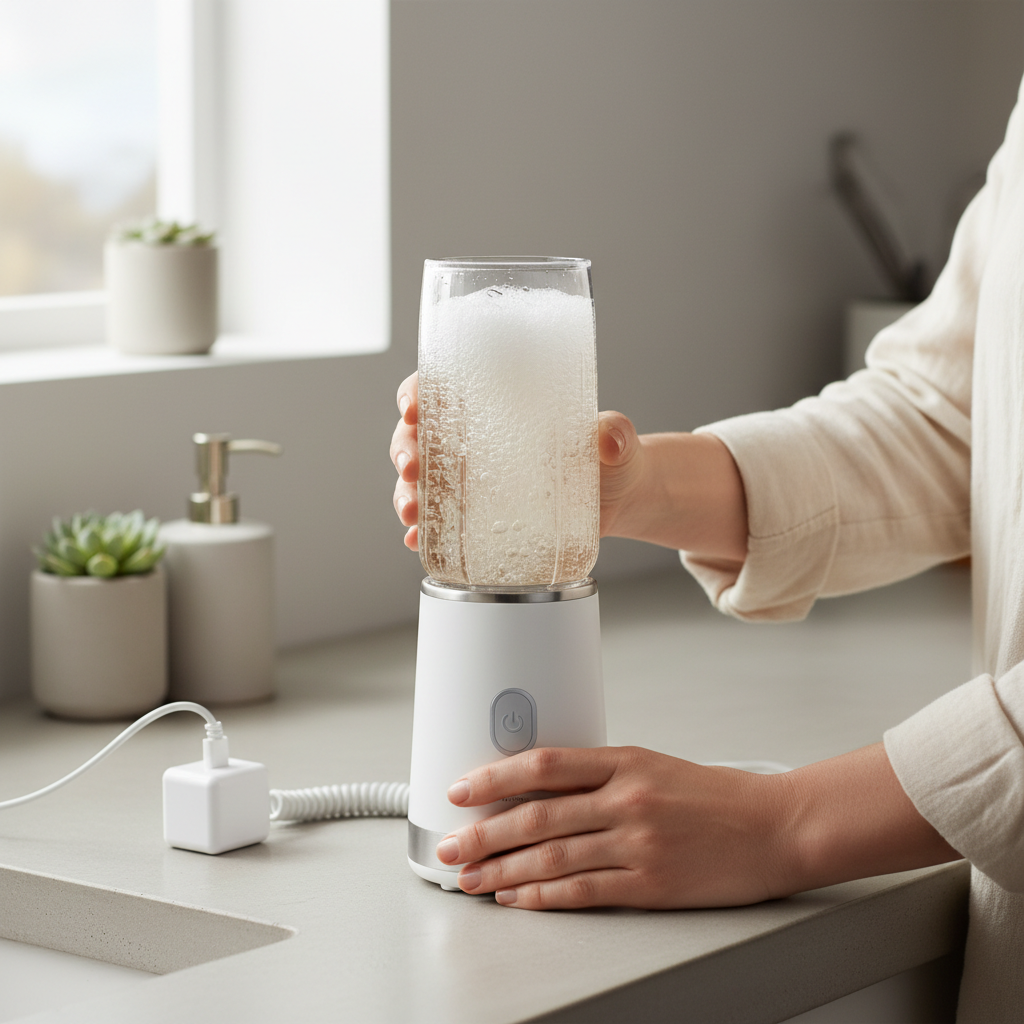
- Rinse immediately, then blend warm water + a drop of dish soap for 10–15 seconds
- Rinse again, dry the gasket area, store with lid off when possible
Safety note: avoid running the motor continuously for long periods if the manual warns against it, heat buildup can shorten battery life. If you notice burning smells, unusual noise, or swelling near the battery area, stop using it and contact the seller or manufacturer.
Common mistakes (and what to do instead)
- Mistake: Expecting it to replace a countertop blender.
Do instead: treat it as a “single-serve mixer” that can handle light frozen work with enough liquid. - Mistake: Using huge ice cubes or big frozen strawberries.
Do instead: pre-cut, or let frozen fruit sit 2–3 minutes to soften slightly. - Mistake: Tossing it in a bag right after rinsing.
Do instead: dry the base seam and gasket area; that’s where funk starts. - Mistake: Charging with random high-output bricks.
Do instead: follow the device’s input rating. According to the Federal Trade Commission (FTC), consumers should use products as directed and be cautious about misleading performance claims in advertising; for charging, “as directed” is the safest interpretation.
When a cheaper USB portable blender is enough, and when to upgrade
A budget unit is usually enough if your daily routine is shakes, soft fruit smoothies, and quick cleanup. It’s also a good fit if you value portability more than texture perfection.
Consider upgrading if you keep hitting stalls, you regularly blend dense frozen ingredients, or leaks show up even after gasket care. At that point you’re not “doing it wrong,” you’re simply outside what many entry-level portables can comfortably do.
Key takeaways (so you can decide fast)
- USB-C + clear specs tend to correlate with fewer headaches than vague listings.
- Battery capacity and seal quality matter more than flashy RPM claims.
- Technique (liquid first, smaller frozen pieces, two cycles) can make budget models feel much stronger.
- If your goal is thick blends, nut butter, or ice-only drinks, a portable budget blender may not be the right tool.
Conclusion: a smart way to buy without overpaying
The best budget portable blenders with usb charge are the ones that match your ingredients, charge reliably, and don’t create daily friction around leaks or cleanup. If you shop by a short checklist, not hype, you can get a genuinely useful little blender and skip the “returned after three uses” experience.
Your next step: pick your main use case, then filter options by USB-C, stated battery capacity, and seal design reviews, and you’ll narrow the field quickly without paying premium prices.
FAQ
Are USB rechargeable portable blenders actually powerful enough for smoothies?
Many are, for smoothies that include enough liquid and reasonably sized frozen fruit. If you want very thick blends, performance varies a lot, and a small portable motor may stall.
How many blends can I expect per charge on a budget model?
It depends on battery size and what you blend. Soft ingredients usually allow more cycles; frozen fruit drains batteries faster. If a listing doesn’t state mAh, expectations get risky.
Is USB-C better than micro-USB for portable blenders?
In many cases, yes, because cables are easier to replace and charging tends to be more consistent. The bigger win is having clear input specs and a reliable charge indicator.
Can I blend ice cubes in a cheap portable blender?
Sometimes, but it’s usually safer to use small cubes, add liquid, and avoid overfilling. If the product repeatedly stalls or the manual warns against ice, follow the manufacturer guidance.
Why does my portable blender leak from the bottom?
Common causes include a twisted gasket, residue on the seal surface, cross-threading, or a worn seal. Cleaning the gasket area and tightening correctly helps, but persistent leaks can mean a defect.
What’s the easiest way to clean a portable blender while traveling?
Add warm water and a drop of dish soap, blend briefly, then rinse and dry around the base. Leaving it wet and sealed is what often causes odor.
Are portable blenders safe to use every day?
For most people, daily use is fine when you follow the manual and keep the food-contact parts clean. If you have specific health concerns about ingredients or sanitation, it’s reasonable to consult a qualified professional.
If you’re trying to choose between a few listings and the spec sheets feel vague, you can save time by building a quick compare grid using the criteria above, then buying the one with clearer charging details, better seal feedback, and a cup shape you won’t hate cleaning.