
Best budget wireless earbuds waterproof options exist, but the tricky part is separating “splash-resistant marketing” from earbuds that can handle real sweat, rain, and daily abuse without falling apart.
If you run outside, commute in unpredictable weather, or live in the gym, waterproofing is not a bonus feature, it’s the difference between a solid purchase and an annoying return. And on a budget, brands often cut corners in places you won’t notice on day one, like mic wind filtering, fit stability, or charging case sealing.
This guide breaks down what actually matters, how to read IP ratings without getting fooled, and how to choose a pair that feels like a smart buy, not a gamble.
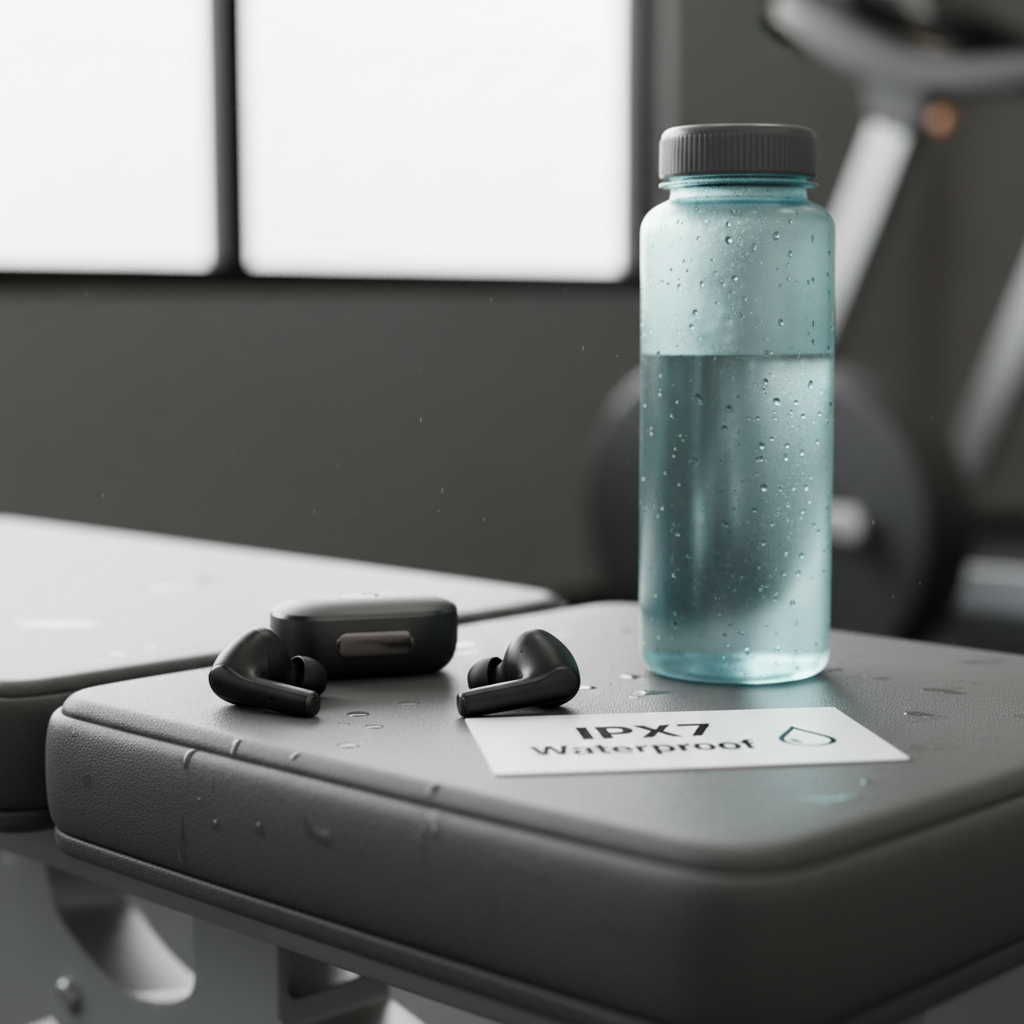
What “waterproof” really means for earbuds (and what it doesn’t)
Most earbuds marketed as “waterproof” are really water-resistant. That’s normal, even among expensive models, because true waterproofing with a strong warranty is hard when you have microphones, vents, and charging contacts.
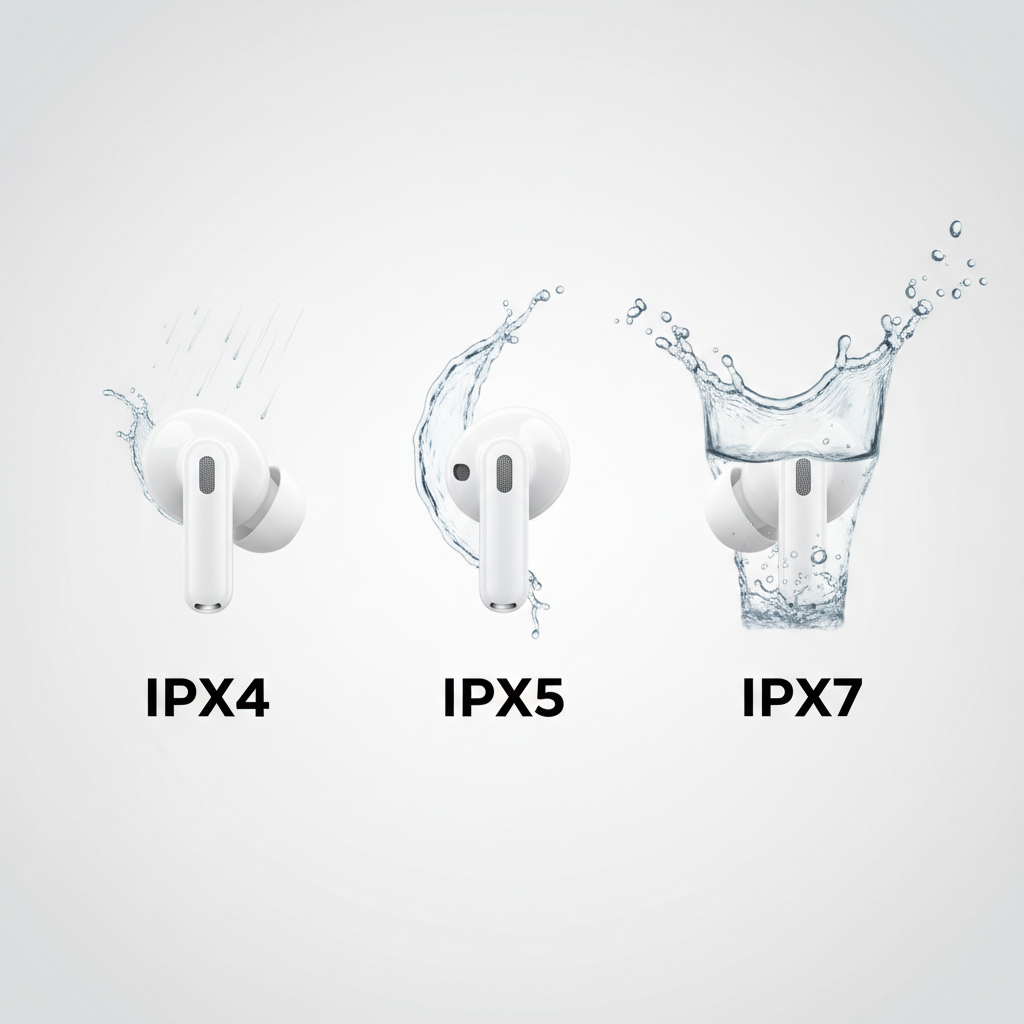
The simplest way to keep expectations realistic is to read the IP rating. According to IEC (International Electrotechnical Commission), IP ratings describe how well a device resists dust and water under specific test conditions, not every real-world scenario.
- IPX4: splashes and sweat, usually fine for most gym use.
- IPX5: stronger water jets, better margin for heavy sweating and rain.
- IPX7: temporary immersion, helpful if you’re accident-prone, but still not a free pass for swimming.
- IP6X (if you see it): dust resistance, great for outdoor runs and beach days.
Two practical caveats people miss: the charging case often has no water rating, and warranty exclusions may still deny water damage claims. That’s not always shady, it’s just how many consumer electronics policies work.
Quick self-check: what kind of waterproof budget earbuds do you need?
Before you compare models, pin down your use case. This saves money because you won’t pay for “features” you never use, while missing the one thing you needed.
- Mostly workouts indoors: IPX4 can be enough if fit is secure.
- Outdoor running in rain: aim for IPX5 or better, plus strong wind noise handling on calls.
- Heavy sweat (HIIT, long runs): prioritize ear tips that seal well and materials that wipe clean.
- Commutes + calls: mic quality and transparency mode often matter more than a higher IP number.
- Clumsy moments (drops into sink/puddle): IPX7 reduces stress, but dry and clean them fast anyway.
If you’ve had earbuds “die” early, it’s often not the water rating alone, it’s a mix of sweat minerals, blocked vents, and case charging pins corroding over time.
Budget buying priorities: what matters most under $100
When you’re shopping for the best budget wireless earbuds waterproof enough for real life, you’re usually balancing five things. Get three of them right and you’ll be happy.
- Fit stability: ear tips and sometimes ear wings do more than any spec sheet.
- Battery reality: look for consistent performance, not just the biggest number.
- Controls you won’t hate: physical buttons can be better with wet hands, touch controls can be more flexible.
- Call quality: budget models vary wildly here, even when sound is decent.
- Return policy: boring, but it’s your safety net if fit or connectivity disappoints.
Noise canceling is a bonus, but at low prices it can be uneven. A good seal plus decent passive isolation often beats weak ANC that adds hiss.
Comparison table: what to look for at a glance
Use this table as a quick filter while you browse listings. It won’t pick a model for you, but it stops you from comparing the wrong stuff.
| Need | Minimum target | Nice to have | Common budget trade-off |
|---|---|---|---|
| Workout sweat resistance | IPX4 | IPX5, wipeable matte finish | Touch controls misfire with sweat |
| Rainy outdoor runs | IPX5 | Wind noise reduction on mics | Lower mic clarity outdoors |
| Accidental dunk protection | IPX7 | Fast-draining design | Charging case still vulnerable |
| All-day use | ~6 hrs per charge | Quick charge, multipoint | Smaller drivers, thinner bass |
| Calls & meetings | Clear voice indoors | Transparency mode that sounds natural | Robotic voice processing |
How to evaluate listings without getting burned
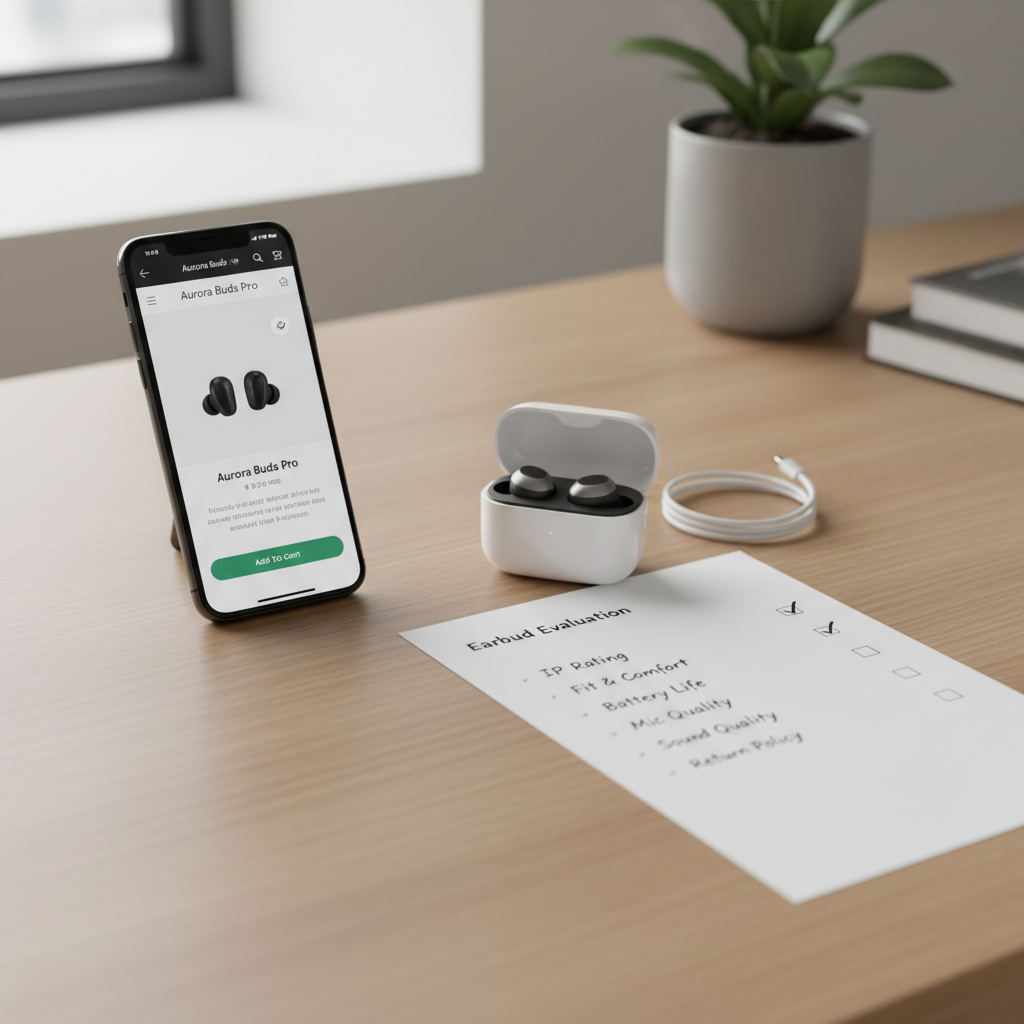
Product pages can be messy. Here’s how experienced buyers usually “sanity check” before they commit.
1) Verify the exact IP rating wording
Look for a specific rating like IPX5, not vague phrases such as “waterproof nano-coating.” If a listing hides the rating, assume it’s low or untested.
2) Watch for case protection (or lack of it)
Even if the earbuds are rated, many cases are not. If your routine includes tossing the case into a wet gym bag, that’s a risk. A simple workaround is a small zip pouch.
3) Check ear tip options and sizing
A budget pair with three tip sizes can beat a pricier pair with mediocre fit. If you have small ears, also check if the shell looks bulky, photos tell you more than a spec line.
4) Confirm codec and device compatibility, lightly
You don’t need to obsess over codecs, but do confirm basics: iPhone users should expect AAC support, Android users may value aptX where available. If you don’t know what that means, it’s fine, prioritize stability and fit.
5) Read the “bad reviews” for patterns
Ignore one-off complaints, focus on repeats: left ear cutting out, case not charging, weak Bluetooth range. Those patterns usually reveal quality control issues.
Real-world setup tips: make budget earbuds last longer around water
Even the best budget wireless earbuds waterproof-rated can fail early if you treat them like sealed action cams. A few habits go a long way.
- Wipe after workouts: a quick dry cloth wipe helps remove sweat salts that can irritate seams and grilles.
- Let them air-dry before charging: charging pins plus moisture is a bad combo.
- Clean ear tips weekly: warm water and mild soap, then fully dry, helps maintain seal and sound.
- Don’t blast water into mic ports: even with higher IP ratings, water jets at close range can stress seals.
- Use the right tip size: a better seal improves bass, call clarity, and perceived ANC.
If you notice muffled audio after a wet session, stop using them for a bit and let them dry. Heat sources like hair dryers can warp materials, room-temperature drying is usually safer.
Key takeaways and a simple way to choose
If you want a practical shortcut, pick based on your main environment, then confirm comfort and returns. For most people, IPX4–IPX5 plus a secure fit is the sweet spot, IPX7 is peace of mind if you’re rough on gear, but it doesn’t magically protect the case.
- Gym only: prioritize fit and wipeability, IPX4 is often fine.
- Outdoor sweat + rain: IPX5 and solid call performance matter.
- Accident-prone: IPX7 can reduce stress, still dry before charging.
Action step: make a short list of 3 models, then choose the one with the clearest IP rating, the most tip options, and the best return policy for your retailer. That combo usually beats chasing a “perfect” spec sheet.
FAQ
Are “IPX7 earbuds” safe for swimming?
Usually no. IPX7 suggests temporary immersion under test conditions, but swimming adds motion, pressure changes, chemicals, and repeated exposure. If you need swim earbuds, look for products explicitly designed and warranted for that.
Is IPX4 enough for heavy sweating?
It can be, especially for indoor workouts, but heavy sweat can creep into grilles and seams over time. If you sweat a lot or train daily, IPX5 often gives a bit more margin, and cleaning habits matter just as much.
Do waterproof earbuds sound worse than non-waterproof ones?
Not necessarily. Water resistance can change venting and tuning, but in the budget tier, sound quality differences usually come more from driver tuning and fit than the rating itself.
Why do my earbuds die even though they’re water-resistant?
Common culprits include charging contact corrosion, moisture trapped in the case, and clogged mesh from sweat and earwax. Letting them dry before charging is a small step that often helps.
Should I prioritize ANC or water resistance on a budget?
If your main issue is sweat and rain, water resistance and fit come first. Weak ANC can be disappointing, while a good seal already reduces a lot of noise. If you fly often, consider stretching budget for better ANC.
What should I do if earbuds get wet inside the charging case?
Power them off if possible, wipe visible moisture, and let everything air-dry fully before charging again. If there’s persistent crackling or charging issues, you may want to contact the retailer or manufacturer support.
Are touch controls bad for workout earbuds?
They can be annoying with sweat or gloves because accidental taps happen. Some people love them, others prefer physical buttons for reliability, it’s a comfort choice more than a strict quality marker.
If you’re sorting through product pages and want a more “no-regrets” path, make your shortlist around IP rating + fit system + return policy, then only compare extras like ANC or app EQ after those basics look solid.