
Budget portable speakers can sound surprisingly good outdoors, but only if you pick for the environment you actually use, wind, distance, and the way bass disappears in open air.
Most people get stuck in the same place, the product page says “big sound,” reviews feel random, and you end up paying for features you never use, or worse, a speaker that’s loud but harsh the moment you turn it up.
This guide focuses on what tends to matter for outdoor listening in 2026, practical specs to check, and a short list of “buying lanes” so you can choose fast without guessing.
What “outdoor” really demands from a portable speaker
Outdoors is unforgiving. Rooms add reflections that make speakers feel louder and fuller, outside you lose that help, so the same device can feel thin even at the same volume.
Here are the traits that usually separate a good patio or campsite pick from a regret purchase:
- Real usable volume, not just peak watt claims. You want clean sound at 70–90% volume, not distortion.
- Battery life that matches your habits. Short walks and tailgates are different from all-day beach trips.
- Weather resistance. “Splash-proof” and “waterproof” are not the same when a speaker sits near a cooler or sand.
- Placement flexibility. A handle, flat stable base, or clip can matter more than an extra EQ mode.
- Connection stability. Outdoors you move around, phones go in pockets, people walk between you and the speaker.
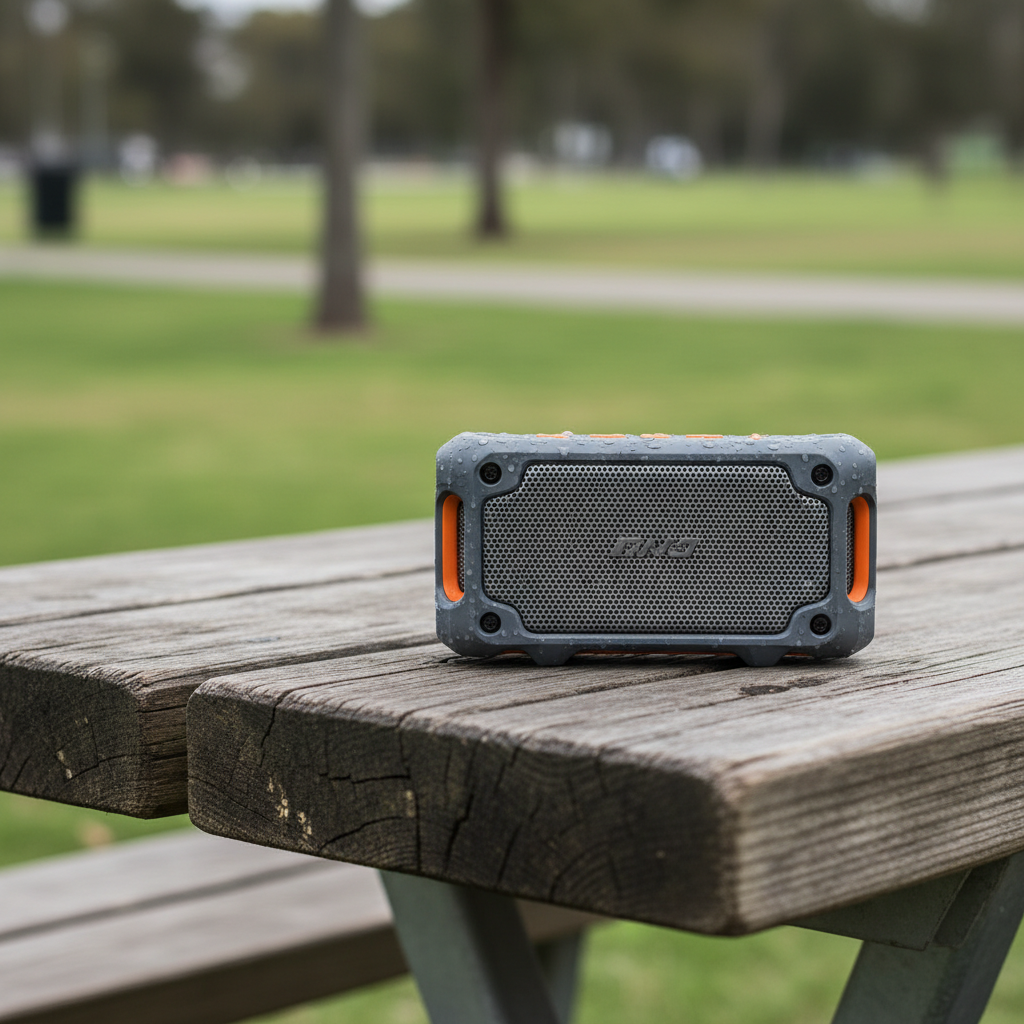
Quick self-check: which type of outdoor listener are you?
Before you compare models, decide what you actually need. This short checklist usually makes the “right” category obvious.
- Backyard / patio: You want warm sound at medium volume, easy charging, and simple controls.
- Beach / pool: Prioritize water and dust resistance, plus buttons you can press with wet hands.
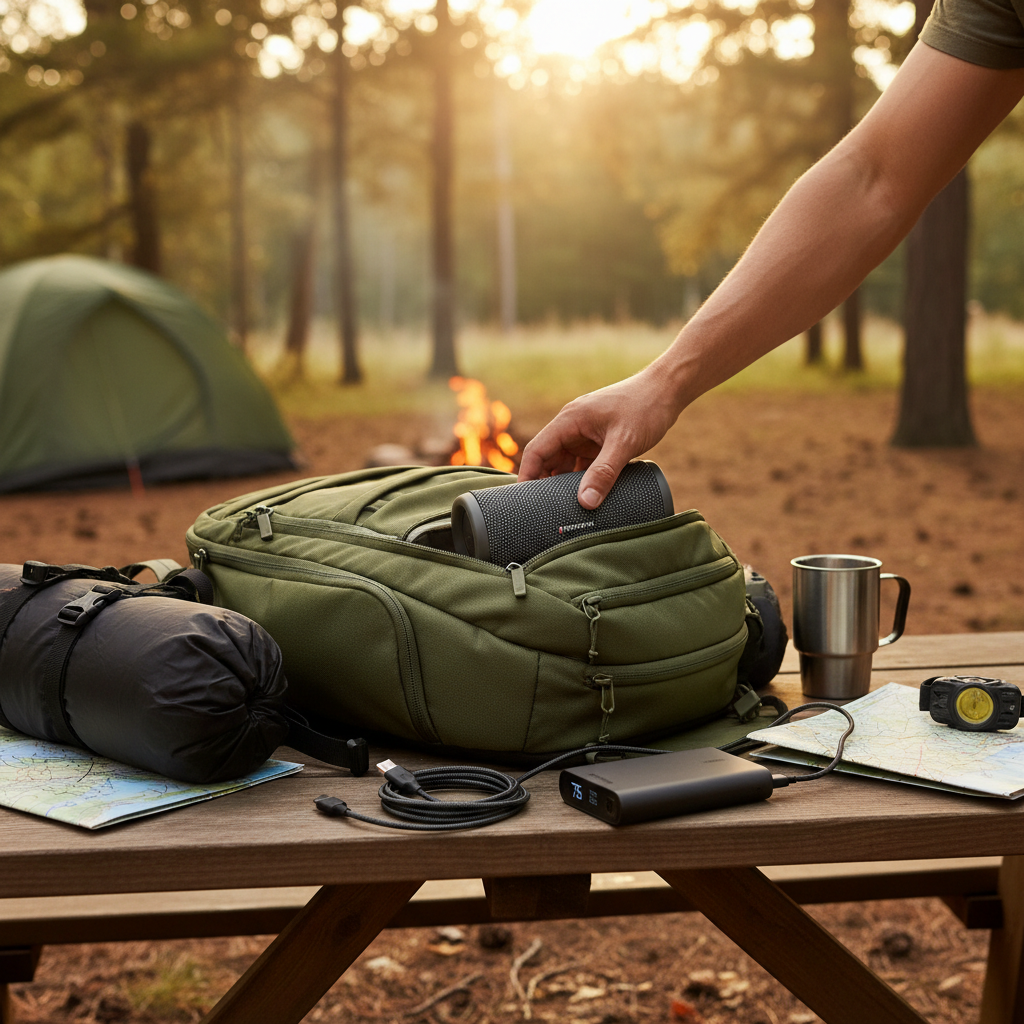
- Hiking / travel: Weight and packability matter, and battery honesty matters more than bass.
- Tailgate / group hang: Louder, bigger battery, and a stable shape that won’t tip on uneven ground.
- Kids / shared use: Durable shell, simpler pairing, and predictable volume behavior.
If you’re shopping specifically for budget portable speakers, this step prevents overbuying, because “outdoor” can mean a quiet porch or a windy open field.
The specs that matter (and the ones that often waste money)
IP ratings: read them like a buyer, not like marketing
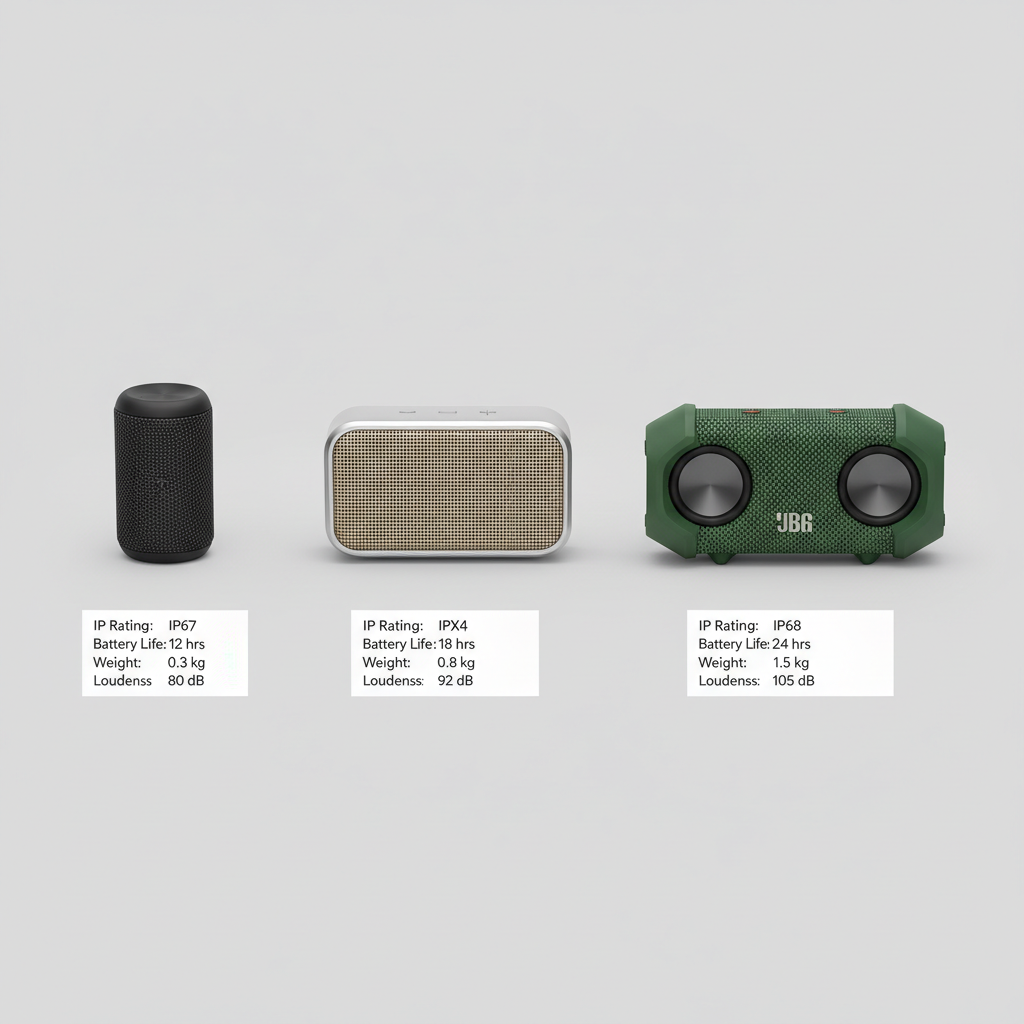
In many cases, IPX4 is fine for light splashes, while IP67 is a better target if you expect sand, rain, or accidental dunking. If the listing is vague, treat it as a warning sign.
According to IEC (International Electrotechnical Commission), IP ratings describe dust and water ingress protection under defined test conditions, not every real-world accident, so it’s smart to stay conservative for beach or pool days.
Battery claims vs real use
Battery life is often measured at moderate volume, with bass settings off. If you like loud playback outdoors, assume you’ll get less than the headline number, sometimes a lot less.
- All-day hangouts: aim for “rated” 12–20 hours so you still get comfortable headroom
- Short outings: 6–10 hours can be perfectly fine, and sometimes lighter
Bluetooth version, range, and codecs
Stable connection beats fancy acronyms for most outdoor use. Bluetooth 5.x helps, but antenna design and phone placement can matter just as much. If you use iPhone, AAC support can help, Android users may care about other codecs, but outdoors the difference often gets drowned out by wind and ambient noise.
Size and driver tuning
Bigger speakers generally move more air, which helps bass outdoors. Small speakers can still work well, but expect more “clear mids” than “deep rumble.” If you want punch at a picnic table, a medium-size cylinder or brick often beats a tiny puck.
Best value picks by outdoor scenario (2026 short list)
Instead of pretending there’s one “best,” here’s a practical way to shop. These categories map to what most buyers mean when they search for budget portable speakers for outdoor use.
| Scenario | What to prioritize | Typical sweet-spot features | Common mistake |
|---|---|---|---|
| Patio / small group | Balanced sound, simple controls | USB-C charging, EQ app optional | Buying “party” size you never carry |
| Beach / pool | IP67-style protection, easy grip | Rubberized shell, lanyard, loud mids | Ignoring dust resistance at the beach |
| Hiking / travel | Weight, battery honesty | Clip/strap, compact brick shape | Chasing bass from a tiny speaker |
| Tailgate / bigger crowd | Clean loudness, big battery | Handle, wide base, stereo pairing | Assuming “watts” equals loud |
Key takeaway: pick the smallest speaker that still gets comfortably loud for your space, because portability is what keeps it used, not what looks impressive on a shelf.
Practical buying steps (fast, no overthinking)
If you want a clean process, use this order. It tends to cut through review noise.
- Step 1: Set your “real” budget and reserve a little for a protective case or strap if you travel.
- Step 2: Choose your protection baseline. Pool and beach buyers should lean toward stronger ingress protection.
- Step 3: Decide loudness needs. For groups, prioritize clean volume. For solo use, prioritize tuning and battery.
- Step 4: Check charging and ports. USB-C is easier in 2026. If you need aux input, confirm it exists.
- Step 5: Read 1-star reviews only for patterns, like drop failures, buttons breaking, pairing issues.
When you narrow to two options, pick the one with the better return policy and clearer warranty terms, it matters more than a tiny spec difference.
Common mistakes with budget outdoor speakers (and how to avoid them)
- Buying for bass alone: Outdoors, clarity matters. A little less bass but cleaner mids can sound better at distance.
- Trusting “waterproof” without the rating: If the listing skips the IP detail, assume the protection is limited.
- Overpaying for lights and gimmicks: Fun features are fine, but don’t trade away battery or durability.
- Ignoring ergonomics: A speaker you can’t grip, hang, or set down securely gets dropped more often.
- Testing indoors only: If possible, test near a window or outside briefly, your ears adjust fast.
Many budget portable speakers also ship with aggressive “smile” EQ that sounds exciting for 30 seconds, then becomes tiring. If there’s an app EQ, lower the top end a touch and keep bass moderate, outdoor sound stays clearer.
Safety and when to get help (yes, even for speakers)
Most issues are simple, but a few situations deserve extra caution:
- Hearing comfort: If you notice ringing or discomfort after listening, turn volume down and take breaks, if symptoms persist, consider speaking with a healthcare professional.
- Battery swelling or overheating: Stop using the device, follow manufacturer guidance, and avoid charging unattended.
- Water exposure: Even with a high rating, dry ports before charging. If sound gets muffled, let it dry fully rather than blasting volume.
According to CDC, preventing harmful noise exposure often comes down to keeping volumes reasonable and limiting time at higher levels, outdoors can trick you into turning it up more than you realize.
Conclusion: the simplest way to choose in 2026
For outdoor use, the winning formula is usually clean volume, realistic battery expectations, and protection that matches your messiest day, not your best day. Once you pick your scenario and set a protection baseline, the “best” options narrow fast.
If you’re deciding today, make a shortlist of two or three budget portable speakers, prioritize return policy and durability, then pick the one you’ll actually carry.
Quick key points
- Open air eats bass, so don’t judge speakers by indoor demos alone
- IP ratings matter, especially for beach and pool use
- Battery claims are often optimistic at outdoor volume levels
- Ergonomics is a feature, handles and stable shapes reduce damage
FAQ
What should I look for in budget portable speakers for outdoor use?
Start with clean loudness, an IP rating that fits your environment, and battery life that matches how long you stay outside. Then check charging type and whether the shape is easy to carry.
Is IPX4 good enough for the beach?
For beach days, IPX4 often feels a bit risky because sand and fine dust can be the bigger problem, not just splashes. If you go often, a model with stronger dust and water protection is usually worth it.
Why does my portable speaker sound weaker outside?
Rooms reinforce sound with reflections, outdoors you lose that reinforcement, so bass and “fullness” drop first. Moving the speaker closer to listeners often helps more than maxing volume.
Do I need stereo pairing for outdoor listening?
It depends. For a group spread across a yard, two speakers placed apart can sound more even at lower volume. For hiking or solo use, one solid speaker is simpler and often more reliable.
Are cheap speakers with huge watt numbers a good deal?
Watt claims can be inconsistent across brands, and they don’t guarantee clean loud playback. Look for reviews that mention distortion behavior and outdoor performance, not just spec sheets.
How can I make a budget speaker sound better outdoors?
Try placing it on a solid surface, keep it closer to ear level, and reduce harsh treble in the EQ if you have an app. Moderate bass usually stays cleaner outside than boosted bass.
Should I buy a speaker with a built-in power bank?
It’s convenient for travel, but it can add weight and sometimes cost. If you already carry a separate power bank, you may not need the feature, focus on durability and battery first.
If you’re trying to keep spending tight but still want outdoor sound that doesn’t fall apart at higher volume, it helps to share your main use case, patio, beach, hiking, or tailgating, and your rough budget range, then you can narrow to a short, realistic shortlist without chasing hype.