
Tech news can feel like a firehose, especially when every update claims to be “the” turning point for U.S. AI.
This week, what matters most is not a single product launch or a flashy demo, it’s the pattern: how model capability, regulation, security pressure, and enterprise budgets keep tugging at the same rope. If you track the right threads, you can usually predict where the next quarter’s real decisions land.
Below is a practical read of the latest technology headlines through a U.S. AI lens, with a focus on what changes behavior: how teams buy, how risk teams respond, and how policy might reshape roadmaps.

What “matters” in U.S. AI this week (signal vs. noise)
If you only remember one thing, remember this: the most important AI updates are the ones that change constraints—cost, latency, compliance, security, and procurement friction.
- Capability updates matter when they reduce total workflow steps, not when they just improve benchmark scores.
- Pricing and packaging matter when they shift pilots into production.
- Security and privacy moves matter when they force new architecture choices.
- Federal tech policy updates matter when they change what you can deploy, log, or audit.
A lot of readers scan silicon valley updates looking for “the next big thing.” But in practice, teams ship what procurement approves and what security will sign off. That’s the reality filter.
AI industry developments: the themes worth tracking
Across this week’s AI chatter, a few themes keep recurring in roadmaps, vendor conversations, and engineering tradeoffs.
1) From model hype to workflow ownership
Vendors increasingly position themselves as owning a full workflow—search, chat, doc generation, ticket routing—because model access is becoming less differentiating. If you’re comparing tools, ask which vendor owns the end-to-end outcome versus just selling “tokens.”
2) “Private AI” becomes a buying requirement
Many orgs want tighter controls: data residency, retention options, and audit logs. According to NIST, strong governance and risk management practices are central to trustworthy AI, and that shows up directly in vendor checklists.
3) More attention on evaluation and monitoring
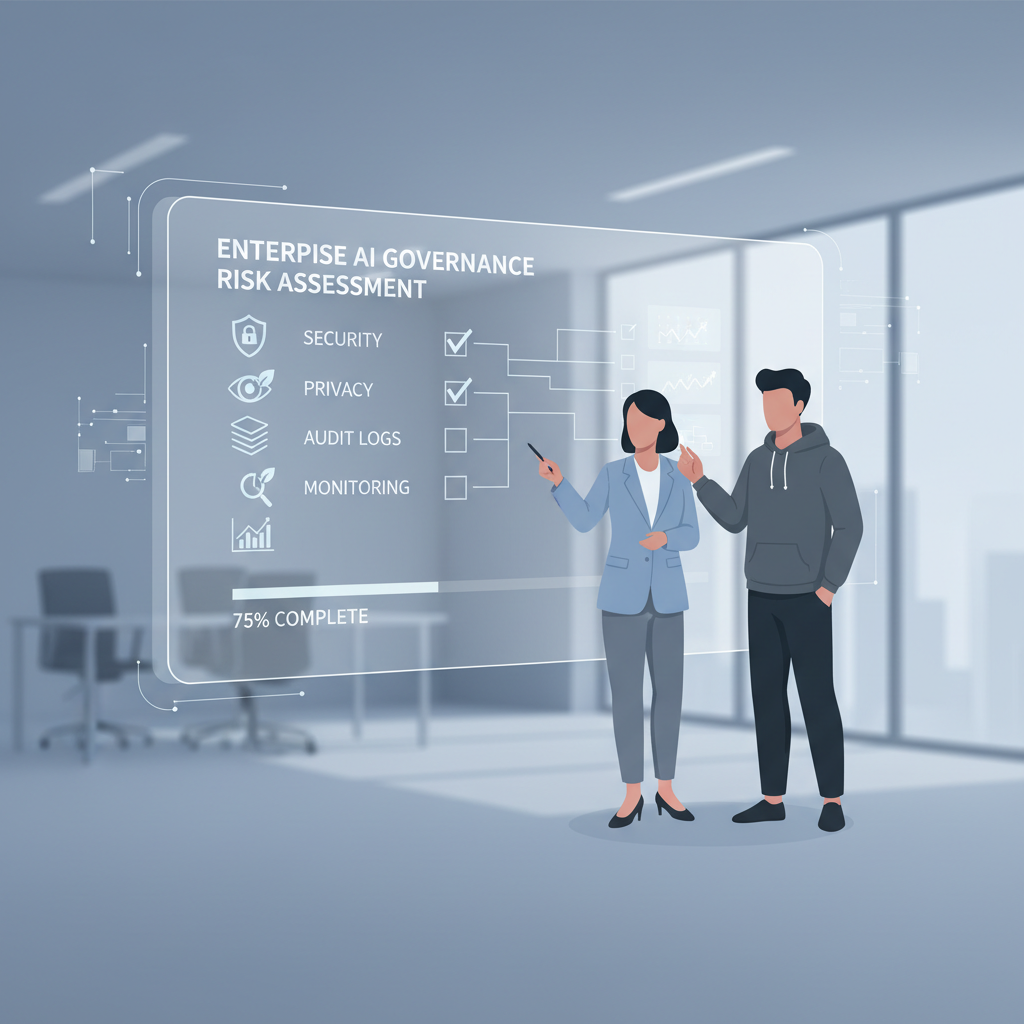
Not glamorous, but critical: teams are investing in offline test sets, red-teaming, and continuous monitoring to catch drift and harmful outputs. This is where pilots often fail, not at the demo stage.
Cybersecurity breach reports: why AI makes incidents feel “closer”
Even when a breach doesn’t directly involve a model, AI changes how organizations interpret risk. People worry about prompt injection, data leakage through chat interfaces, and third-party connectors that quietly expand the attack surface.
- GenAI apps + connectors can expose more data paths than teams realize.
- Shadow AI (employees using unsanctioned tools) creates unmanaged risk.
- Credential stuffing and phishing get faster when attackers automate messaging and targeting.
According to CISA, reducing organizational risk often comes down to basic controls—asset visibility, identity protection, and incident readiness. AI doesn’t replace those, it usually punishes teams who skipped them.
If you’re reacting to cybersecurity breach reports, the most useful question is: “Which of our AI-enabled workflows would we have to shut down if an identity provider, SaaS tool, or connector got compromised?” That answer tells you where to add guardrails first.
Cloud computing market updates: the cost story behind AI
AI strategy becomes cloud strategy the moment usage grows. The surprise for many teams is that the hard part isn’t training, it’s inference cost, data movement, and reliability.
What to watch in cloud conversations
- Reserved capacity and commitments: sometimes the only path to predictable unit economics.
- Data egress and replication: costly when AI apps pull from multiple systems.
- Observability: without tracing and cost attribution, teams argue about who “spent the tokens.”
According to U.S. Government Accountability Office (GAO), effective oversight and governance are recurring themes in federal IT and emerging tech adoption. For private companies, that translates into FinOps discipline and clearer ownership.
Semiconductor supply chain news: why it still affects your roadmap
It’s easy to dismiss semiconductor supply chain news as “hardware people problems,” until procurement asks why your GPU quote has a long lead time or why your preferred instance type is constrained.
The practical impact usually shows up in three places:
- Project timing: pilots start on time, production slips due to capacity planning.
- Model choices: teams pick smaller models or more aggressive batching/quantization.
- Vendor lock-in risk: scarcity can push you toward whoever has capacity, not who fits best.
If you run an AI roadmap, treat hardware constraints like a dependency, not an afterthought. Build a “plan B” model path that uses alternative accelerators or lower compute footprints.

Startup funding announcements: how to read them without getting fooled
Startup funding announcements can be useful signals, but only if you read them as market positioning, not product validation. Funding tells you who has runway to sell, hire, and discount, not whether the tech will survive security review.
Quick filters that help
- Who led the round? Strategic investors can hint at distribution channels.
- What’s the wedge? Security, data, workflow, vertical domain—be specific.
- Do they replace budget or create budget? In tight quarters, replacement wins.
- What must be true to scale? Data access, integrations, compliance approvals.
Many emerging tech trends die at integration. If the product needs six months of data cleanup and custom connectors, the “time to value” story changes fast.
Consumer electronics launches: why they matter even for enterprise AI
Consumer electronics launches shape user expectations. When people get on-device AI features at home, they bring that mental model to work: instant answers, voice interfaces, offline capability, and privacy controls that feel tangible.
In enterprise, that pressure tends to translate into:
- More demand for on-device or edge inference in regulated workflows
- Higher UX expectations for internal copilots and search tools
- More scrutiny on data handling because users now ask better questions
This is one reason latest technology headlines outside your industry still matter. They reset the baseline for what users consider “normal.”
Federal tech policy updates: the guardrails are getting real
Policy doesn’t have to pass a dramatic new law to affect your week. Often it’s guidance, procurement standards, enforcement priorities, or agency-level requirements that change how vendors sell and how risk teams review.
According to The White House, recent U.S. AI actions emphasize safety, security, and responsible innovation. In practice, companies often feel this as stronger expectations around documentation, testing, and transparency.
Practical takeaways for teams
- Document your AI system: what data flows where, what is logged, who can access outputs.
- Set evaluation standards: accuracy isn’t enough, include safety and reliability checks.
- Know your vendors: retention defaults, training-on-your-data policies, sub-processors.
If you’re following tech news for “permission” to move faster, this is the opposite energy. Many orgs will move, but with more paperwork and stronger review gates.
Key takeaways table: what to watch and what to do next
Here’s a simple way to translate headlines into actions your team can take this week.
| Headline category | What it usually signals | Action you can take this week |
|---|---|---|
| AI industry developments | Shifts in workflow ownership and enterprise packaging | Ask vendors for deployment controls, audit logs, and evaluation tooling |
| Cloud computing market updates | Real cost and reliability constraints for AI in production | Set cost attribution, rate limits, and a rollback plan for AI features |
| Cybersecurity breach reports | Rising pressure on identity, connectors, and data governance | Inventory AI tools/connectors, tighten SSO, and restrict sensitive data paths |
| Semiconductor supply chain news | Capacity risk and model sizing tradeoffs | Create a smaller-model fallback and confirm GPU/instance availability |
| Federal tech policy updates | Higher standards for documentation, testing, and procurement | Write a one-page AI system card: data, purpose, tests, owners |
Practical “do this now” checklist for readers
If you want a quick way to turn this week’s tech news into progress, keep it boring and concrete.
- Pick one AI workflow you want in production, then list required systems and data access.
- Decide your risk posture: what data is off-limits, what must be logged, who approves changes.
- Run a connector review: every integration is a security and compliance decision.
- Set budget guardrails: usage caps, alerting, and owner accountability.
- Write down “failure modes”: hallucinations, prompt injection, data leakage, downtime, then plan mitigations.
For regulated environments or sensitive data, it may be worth consulting security, legal, or compliance professionals so your deployment approach matches your obligations.
Conclusion: a calmer way to follow tech news
The trick with U.S. AI coverage is not reading more, it’s reading with a tighter filter. Watch for changes in constraints, look for packaging that moves pilots to production, and treat security and policy as design inputs, not paperwork at the end.
If you do one thing after reading, pick a single headline category you usually ignore, cloud costs, connectors, or policy, and pressure-test your current AI plan against it. That’s where surprises tend to hide.
Action step: schedule a 30-minute internal review this week to map one AI use case end-to-end, including data sources, connectors, logs, and rollback, then decide what you will not allow.